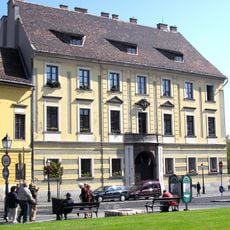
Saint Elizabeth of Hungary Church, Alsó-Víziváros, Catholic parish church in Víziváros, Budapest, Hungary
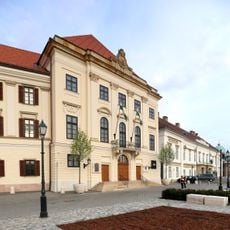
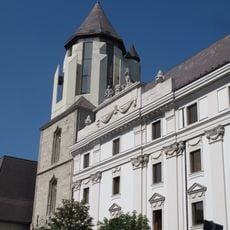
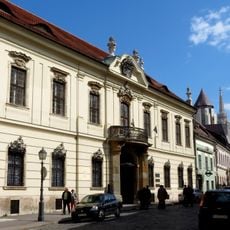
Saint Elizabeth of Hungary Church stands at Fő utca 32, near Corvin tér in Budapest's First District. Its Baroque facade, rebuilt in 1854–56 to plans by Glaser Rudolf and Szumrák Emil under Ferenc Reitter, has a pointed tower and a three-part window with stained glass from Friedrich Baudri's Cologne workshop. The north and south walls incorporate two converted facade walls of Tojgun Pasha's mosque, and a Turkish wall fragment with two donkey-back arched openings is visible on the south side.
The site held an Augustinian monastery, then under Ottoman rule the Tojgun Pasha mosque and a Turkish bath, whose wall remains were found in 1972–73. In 1687 Archbishop György Széchényi founded the Capuchin monastery, and the friars took over the former mosque in 1692. The church was rebuilt in 1854–56 under Ferenc Reitter, with plans by Rudolf Glaser and Emil Szumrák, and consecrated on 22 November 1856.
The church is dedicated to Saint Elizabeth of Hungary, and the high altar erected in 1760 was paid for by Bercsényi Erzsébet, widow of Count Miklós Zichy; its altarpiece of the saint was painted by Mátyás Schervitz. The name "capuchin church" comes from the Capuchin friars, who lived in the adjoining monastery at Fő utca 30 and again serve the parish today.
The building is freely accessible and serves as an active place for prayer and religious ceremonies with regular hours displayed at the entrance. Visitors should dress modestly and be respectful during ongoing services or liturgical activities.
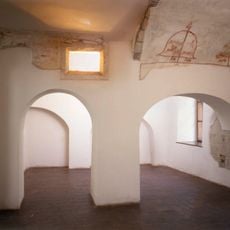
Two facade walls of the Tojgun Pasha mosque survive, adapted, in the north and south walls of the church; on the south side a Turkish wall fragment with two donkey-back arched openings is displayed, and a carved mihrab was found inside the building.
The community of curious travelers
AroundUs brings together thousands of curated places, local tips, and hidden gems, enriched daily by 92,632 contributors worldwide.