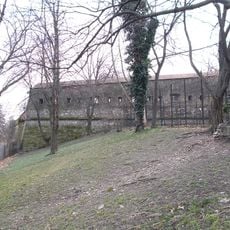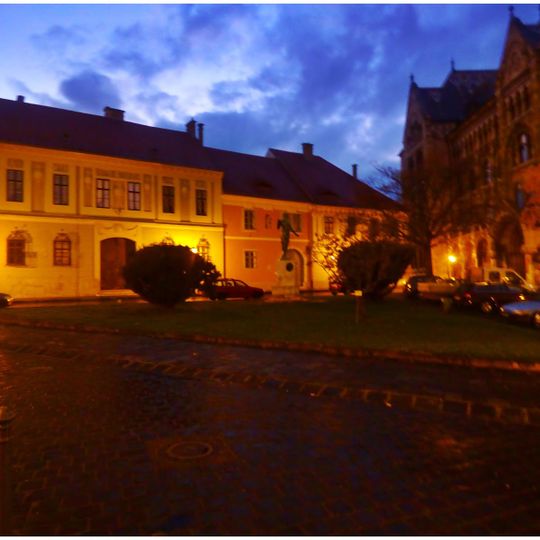
Bécsi kapu tér, square in Buda Castle district, Budapest, Hungary
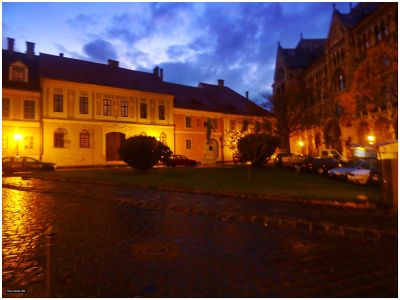
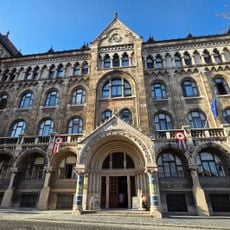
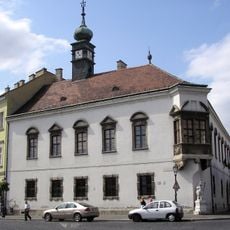
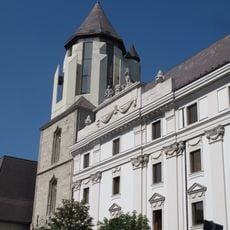
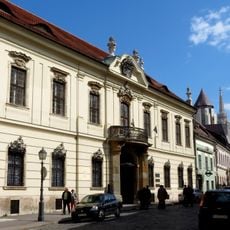
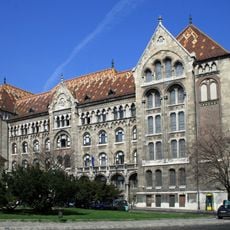
Bécsi kapu tér is a junction square in the Buda Castle district of Budapest, where Ostrom, Táncsics Mihály and Nándor streets converge. It is framed by old houses, the heavy neo-Romanesque National Archives building, and the Vienna Gate opening through the former city wall.
In the Middle Ages the area belonged to a Saturday market linked to nearby Kapisztrán Square, and under Ottoman rule it was known as Szombathely mahalleszi. The square took its current shape after Buda was retaken and received the name Bécsi kapu tér in 1874.
The square's name comes from the Vienna Gate (Bécsi kapu), not from a market; the medieval Saturday market name szombathely belonged to the area shared with Kapisztrán tér, and under Ottoman rule the square was called Szombathely mahalleszi. Weapons once hung on the gate, which popular tradition held to be those of Toldi Miklós; they vanished in the 18th century. The Kazinczy memorial fountain in the small central park carries a relief profile of Ferenc Kazinczy by sculptor Pásztor János, inscribed for the 1831–1931 centenary of his birth.
The square is easy to reach by bus or tram, with stops a short walk away, and it works well as a starting point for exploring the castle district on foot. Wear comfortable shoes because the surrounding lanes are steep and paved with cobblestones.
House number 7, built around 1807 for the Latin and literature professor Grigely József, carries painted medallions of Vergilius, Cicero, Szókratész, Quintilianus and Seneca on its facade. In the 1930s Thomas Mann stayed here as the guest of the owner, Baron Lajos Hatvany.
The community of curious travelers
AroundUs brings together thousands of curated places, local tips, and hidden gems, enriched daily by 92,635 contributors worldwide.