Déri Museum, Art and ethnography museum in Debrecen, Hungary
The Déri Museum is an art museum in Debrecen holding works by various artists, weapons from multiple periods, and historical objects from Europe, the Middle East, and Asia. The collections show how people in different regions and times lived.
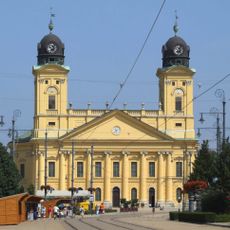
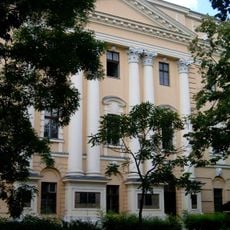
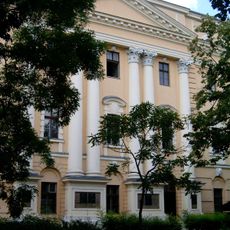
The City Museum opened in 1902 from a donation by the jeweller Artúr Löfkovics. In 1920 Frigyes Déri, a silk manufacturer from Vienna, gave his collection of applied art, East Asian and numismatic objects, prompting a new building. Designed by Dénes Györgyi and Aladár Münnich in Neo-Baroque style, it opened on 25 May 1930 as the Déri Museum.
The museum's best-known exhibit is Mihály Munkácsy's Christ trilogy: "Christ before Pilate", "Golgotha" and "Ecce homo". The painter never saw the three canvases together; they were first shown as a group at the Déri Museum in 1995. In 2019 the Hungarian state bought "Golgotha" from collector Imre Pákh for 3 billion forints, ending a century-long legal dispute over ownership.
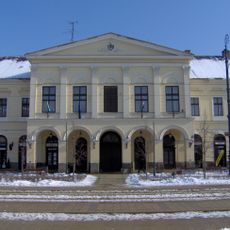
The main building stands at Déri tér 1 in central Debrecen, on the site of the former Pap's Lake botanical garden. The four allegorical statues by Ferenc Medgyessy on the facade face the square, where further Medgyessy works and Tivadar Debreczeny's Merengő stand. The Munkácsy trilogy hangs together in its own hall; the museum reopened after renovation in March 2012.
The three Munkácsy paintings were never seen together by the artist himself; the Déri Museum first displayed the full Christ trilogy in one room in 1995. In 2019 the Hungarian state bought Golgotha from collector Imre Pákh for 3 billion forints, ending a century-long legal dispute over ownership.
The community of curious travelers
AroundUs brings together thousands of curated places, local tips, and hidden gems, enriched daily by 93,696 contributors worldwide.