Dobogó-kő, Mountain peak in Pilis range, Hungary
Dobogó-kő is a mountain summit in the Pilis range that rises to about 699 meters above sea level. The peak represents the highest point of the Visegrád Hills and serves as a central hub for hikers exploring the surrounding forested landscape.
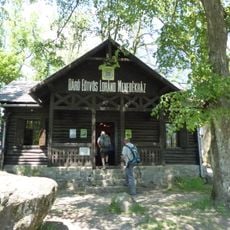
The summit was marked by a stone pyramid memorial honoring Ödön Téry, a Hungarian tourism pioneer who helped establish the region as a hiking destination. This monument reflects the period when the mountain range became accessible to wider audiences seeking outdoor recreation.
Dobogókő is a pilgrimage site for Hungarian neopagans of the revived Táltos faith, akin to shamanism, who hold that the summit is the earth's "heart chakra". The name Dobogó-kő means "beating stone", referring to a rock said to pulse like a heart. The Ödön Téry Memorial, a stone pyramid by Christián Sándor from 1926, stands on the hill.
Dobogó-kő can be reached by road from Budapest via the 11 main road and Pomáz–Pilisszentkereszt, or from Esztergom via Pilisszentlélek on route 11 115, which branches off route 1111 at the Kétbükkfa-nyereg saddle. Regional buses run from both directions, and from Budapest the H5 HÉV suburban line to Pomáz connects with buses to Dobogókő. Cyclists climb roughly 500–550 metres from Esztergom, Pomáz, Pilisvörösvár or Pilismarót.
Dobogókő hosted the first ski slope created in present-day Hungary, laid out in 1923 after the Treaty of Trianon. The slope has two runs and a T-bar lift, and sledging runs and cross-country ski trails are marked nearby. In 2023 the Tour de Hongrie finished a 206 km stage here, won by Yannis Voisard.
The community of curious travelers
AroundUs brings together thousands of curated places, local tips, and hidden gems, enriched daily by 93,473 contributors worldwide.