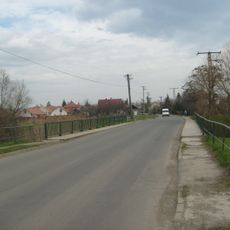
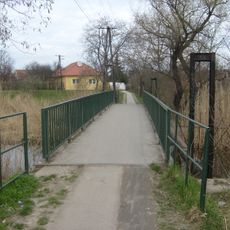
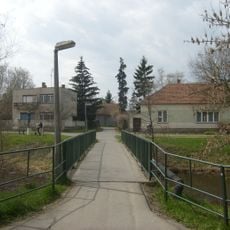
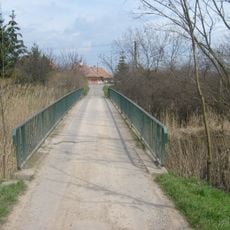
Mágor-puszta, Archaeological site and grassland near Vésztő, Hungary.
Mágor-puszta is a 947-hectare protected area on the western edge of Kis-Sárrét, six kilometres west of Vésztő, enclosed by an oxbow of the Sebes-Körös. Its low double mound, the Mágor-domb, holds a Neolithic tell that was cut open and turned into a museum. The surrounding land keeps loess grasslands, salt steppes, wet meadows and gallery forests.
The Csolt kindred from Vata built a church on the hill beside the mound in the 11th century; it was destroyed in the wars following the adoption of Christianity. A Benedictine church replaced it the next century. Excavations led by Irén Juhász between 1968 and 1988 uncovered Neolithic, Copper Age, Bronze Age and Árpád-era finds.
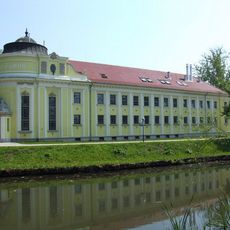
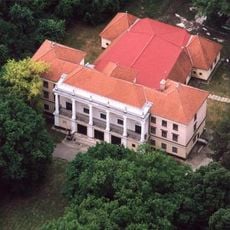
The exhibition occupies the Wenckheim wine cellar, built between 1810 and 1812. Beside the mound stands a park of busts honouring Hungarian writers and poets tied to the Alföld, among them Németh László, Szabó Pál, Féja Géza, Veres Péter, Sinka István and Kovács Imre.
The site lies 6 km west of Vésztő toward Szeghalom, on the western edge of Kis-Sárrét, enclosed by the dead arm of the Sebes-Körös. It covers 947 hectares and can be visited without a guide. The exhibition in the former Wenckheim wine cellar and the mound are the main stops.
The wine cellar housing the exhibition was built between 1810 and 1812 for the Wenckheim family. The museum sits inside this cellar beside the mound, so the archaeological finds are shown in a structure older than the excavations that uncovered them.
The community of curious travelers
AroundUs brings together thousands of curated places, local tips, and hidden gems, enriched daily by 94,668 contributors worldwide.