Gyula Castle, Medieval brick castle and museum in Gyula, Hungary
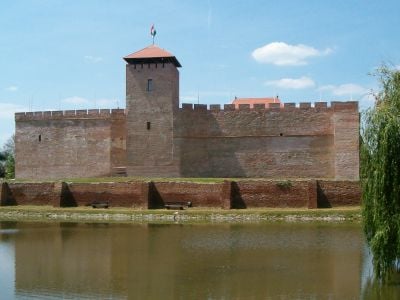
Gyula Castle is a brick fortress featuring a central structure surrounded by a trapezoidal outer wall with a cannon tower at its southwestern corner. Inside, multiple rooms display artifacts and recreations related to medieval life and the castle's past.
King Sigismund granted the Gyula estate to János Maróti, ban of Macsó, in 1403, and Maróti had the castle built; by 1445 much of it stood and its chapel was consecrated on 10 June 1445. After the Maróti line died out in 1476 the castle returned to the crown, and Matthias Corvinus gave it to his son János Corvin in 1482. In 1566 Pertev Pasha besieged it with about 30,000 men against a garrison of barely 2,000.
The castle displays how medieval residents lived through furnished rooms, period objects, and arranged domestic spaces that visitors can explore. These exhibits show daily routines and the way people organized their lives within the fortress walls.
The castle stands in Gyula's town centre on raised ground above the former floodplain of the White-Körös. The museum opened to the public in 1997, with 20 galleries inside the walls; the theatre and medieval shows are staged in the courtyard. Visitors move between rooms and levels by stairs and passages, and the restored walls and roof, rebuilt between 1953 and 1961 and in the 1970s and 1980s, can be walked.
The castle walls were built from bricks fired on site, since no stone was available nearby. In 1566, during the Ottoman siege, the defenders held the outer hussar fort for 13 days before withdrawing across the water ditch into the main castle.
The community of curious travelers
AroundUs brings together thousands of curated places, local tips, and hidden gems, enriched daily by 94,230 contributors worldwide.