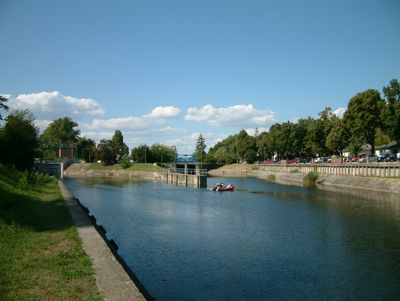
Sió, Regulated waterway in Transdanubia, Hungary.
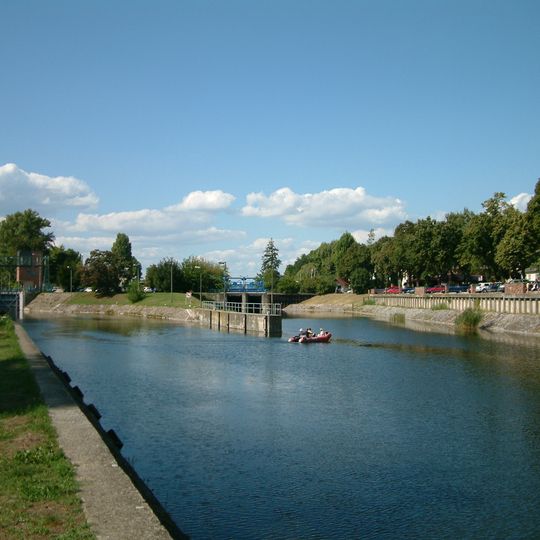
The Sió is a regulated waterway that connects Lake Balaton to the Danube River over 124 kilometers, flowing through Somogy, Fejér, and Tolna counties. The system comprises locks, dams, and control structures that manage water flow throughout the route.
The Sió is a natural watercourse that was regulated in stages: the stretch from Ozora to the Kapos was channelled by local landowners between 1821 and 1835, lowering Lake Balaton by about one metre. Under royal commissioner Count Ferenc Zichy, works continued from Ozora up to the lake, and the dam closing the lake's outflow was demolished on 23 October 1863. The first concrete-lined lock on the canal was put into service in 1891, and a first enlargement ran from 1908 to 1936.
The canal is part of regional water tourism networks and connects multiple Hungarian waterways. Visitors use it for paddling sports and experience the rural landscapes along its route.
The canal has multiple access points along its length, though not all sections are equally accessible. Visitors should prepare for changing water conditions and local weather patterns.
The Sió is not a dug canal but a regulated natural stream, recorded as Ozora in the founding charter of the Pécs bishopric in 1009. Emperor Galerius is said to have had its bed cleared in 292 AD, a claim historian Virág Árpád disputed for the Siófok lock. The first concrete-lined lock on the channel was commissioned in 1891.
The community of curious travelers
AroundUs brings together thousands of curated places, local tips, and hidden gems, enriched daily by 92,634 contributors worldwide.