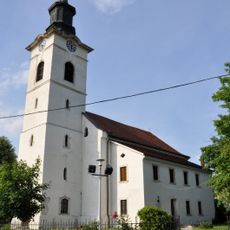
Minaret in Érd, Ottoman minaret in Ófalu, Hungary
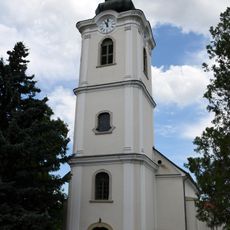
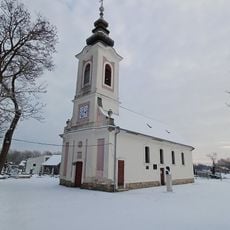
The Minaret in Érd is a 23-metre limestone tower built in the 17th century as part of a mosque. Its 12-sided shaft rises from a polygonal base through a short, 1.1-metre trapezoidal transition to a circular balcony at 15 metres, topped by a conical cap. The balcony, cap and concrete stairway were reconstructed in 1970–1971.
The minaret was built in the 17th century by Ottoman builders as part of a mosque complex near ancient routes. Its survival through centuries of political changes reveals how the region witnessed different powers and faiths.
The street beside the tower is still called Mecset Street, meaning Mosque Street, after the mosque that once stood here. The historian József Molnár described that mosque as a rectangular building with colourful windows, carpets and a mihrab facing a stone-framed door. A reinforced-concrete copy of the mihrab now stands near the minaret.
The minaret has been closed to visitors since summer 2020 because the concrete staircase is unsafe; the town plans to restore the staircase and tower with partial Turkish funding. It stands in Érd-Ófalu on Mecset Street, near the Danube dam and the line of an old Roman military road. The mosque's prayer niche has been rebuilt in reinforced concrete beside the tower.
The tower is one of only three surviving Ottoman minarets in Hungary and one of very few Islamic structures remaining from that era. This rarity makes it valuable evidence of how the Ottoman presence shaped the region's landscape.
The community of curious travelers
AroundUs brings together thousands of curated places, local tips, and hidden gems, enriched daily by 94,329 contributors worldwide.