Zelezna Baba Cave, Limestone cave in Sóskút, Hungary.
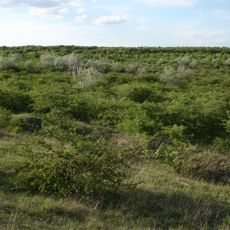
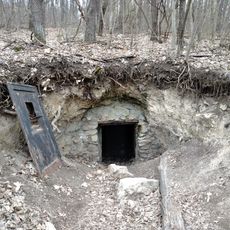
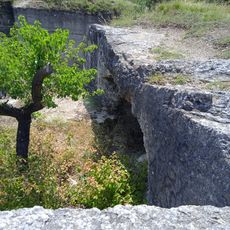
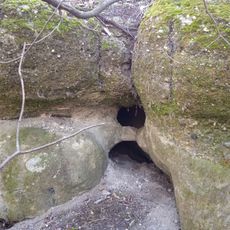
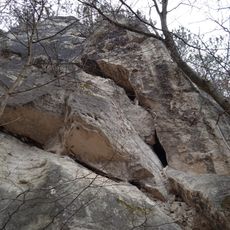
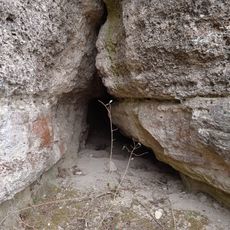
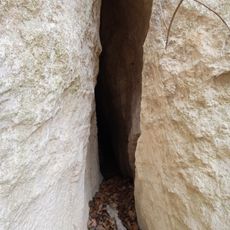
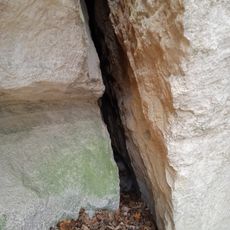
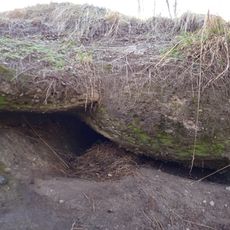
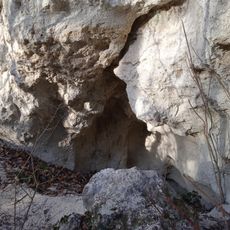
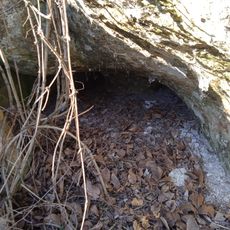
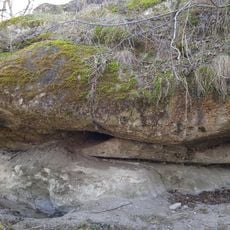
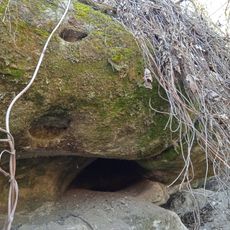
Zelezna Baba opens at the base of an abandoned, overgrown quarry on the northern end of a rock ridge on Kálvária-hegy, north of Sóskút. Its entrance is 6.5 m wide and 5.5 m high, irregular with a horizontal axis. Inside, the single-level cave branches into two passages about 10–15 m long, 1–1.5 m high and 2–3 m wide, with a triangular cross-section. The horizontal extent is 46 m.
Archaeological finds from the Bronze Age and Roman period came from the cave's fill, and its archaeological site identifier is 11446. In the 1920s a quarry worked the rock face here, cutting the stone back to the ledge in front of the cave and destroying its outer section. Árpád Halász surveyed the cave on 20 August 1939, drawing ground plans and a north–south section at 1:500.
The name Zelezna Baba first appears in a manuscript written in 1976 and was printed in 1984. Earlier sources call the cave Babó-lyuk, Babólyuk, Sóskuti-barlang and Sós-kuti-barlang. Local tradition recorded in 1940 tells that during Ottoman rule villagers of Sóskút hid inside, and that the entrance was later walled up.
The cave is unsecured and can be entered without a permit, but only with basic caving equipment; the passages are low, about 1–1.5 m high, and the floor slopes down toward the southwest. The entrance lies at the foot of an overgrown abandoned quarry on the Benta-patak side of Kálvária-hegy, north of Sóskút. The inner end is blocked after about 60 m by humus and clay.
The cave's fill has yielded Bronze Age and Roman-era finds, and it is registered as archaeological site no. 11446. Halász Árpád, who surveyed it in 1939, recorded local legends: a 15 km tunnel to Etyek, and villagers walled in with hot lime during the Turkish wars.
The community of curious travelers
AroundUs brings together thousands of curated places, local tips, and hidden gems, enriched daily by 93,782 contributors worldwide.