Cork Harbour, Natural harbor in County Cork, Ireland
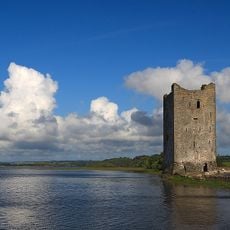
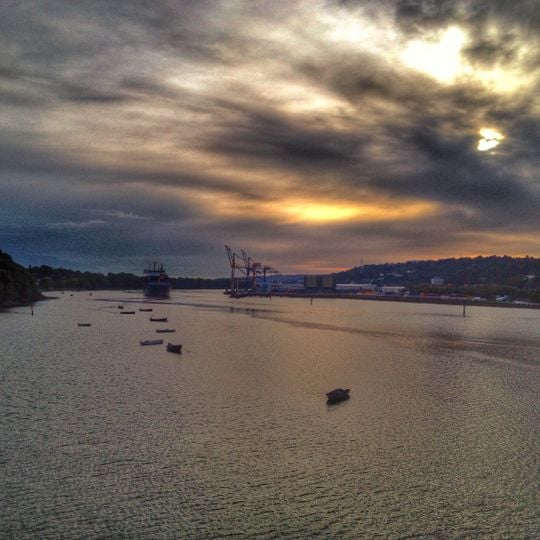
Cork Harbour is a natural harbor in County Cork that spans across several interconnected islands and accommodates modern vessels of all kinds. The water is deep enough for large cargo ships and varies in depth, allowing different parts of the harbor to host different types of vessels.
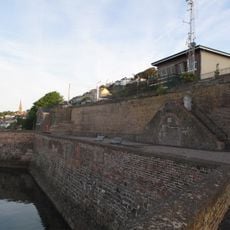
Cork Harbour's first coastal defences date to the 17th century, built to protect the approaches to Cork city. Fort Camden and Fort Carlisle were erected on opposite shores of the harbour entrance during the American War of Independence, not on islands. During the Napoleonic Wars the naval establishment moved from Kinsale to Cork Harbour, and a dockyard was built on Haulbowline Island with a fort on Spike Island and Martello towers around the harbour. Fort Templebreedy was added south of Fort Camden in the early 20th century.
The Royal Cork Yacht Club, which traces its origins to the Cork Water Club of 1720 on Haulbowline Island, is now based at Crosshaven on the harbour's south-western shore. Rowing is practised on the River Lee between Cork and Tivoli, and marinas at East Ferry on Great Island, Monkstown and Blackrock also serve leisure boaters.
Vessels up to 90,000 tonnes can technically enter the harbour, but access to the Cobh docks is limited to ships of 60,000 tonnes at most. Cork Port provides pilots and towage at sea for incoming ships, with anchorages at Cork, Tivoli, Cobh and Ringaskiddy. Ringaskiddy also handles car ferries from France, Wales and England.
Spike Island was once a military fortress and was later converted into a prison, with regular ferry services today providing access to this history. The island tells a compelling story of defense and confinement through its buildings and ruins.
The community of curious travelers
AroundUs brings together thousands of curated places, local tips, and hidden gems, enriched daily by 92,715 contributors worldwide.