Leacanabuaile, Stone ringfort in County Kerry, Ireland
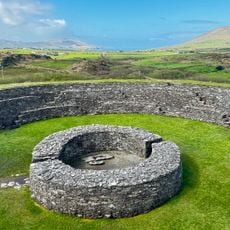
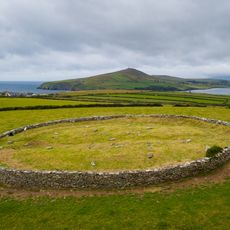
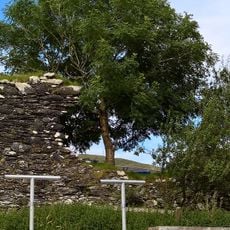
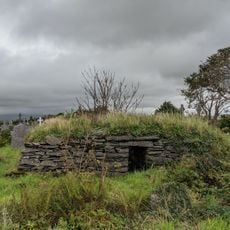
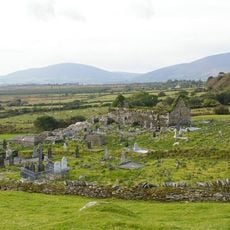
Leacanabuaile is a circular stone fortification measuring about 30 meters across with exterior walls roughly 2 meters tall and 3.3 meters thick. Inside the fort walls stand three stone beehive houses and an underground passage, reached through an entrance on the eastern side.
Built around the 9th century AD as a defended farmstead, Leacanabuaile was excavated in 1939–40. The dig produced iron knives and pins, bone combs, bronze, millstones and lead, dating the occupation to the 9th or 10th century AD. The Irish name Leaca na Buaile means "hillside of the milking-place".
The name comes from Irish and means 'hillside of the milking-place', showing how this was a farming settlement where people raised livestock. Visitors can see how the stone structures were built to protect daily work and animals from outsiders.
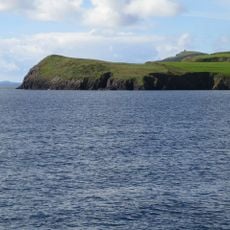
The site sits on a steep hillside with grassy slopes that provide natural protection and good views of the surrounding area. Visitors should expect uneven ground and potentially slippery conditions, especially after rain.
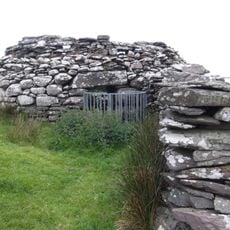
A souterrain inside the western beehive hut leads into a seven-metre passage ending in a five-metre chamber built within the wall itself; a second chamber about three metres long lies in the northeast wall. A covered drain runs from the central square house to the gate. The square house foundation at the centre was added later and does not belong to the original cashel.
The community of curious travelers
AroundUs brings together thousands of curated places, local tips, and hidden gems, enriched daily by 94,393 contributors worldwide.