Moore Hall, Country house in County Mayo, Ireland
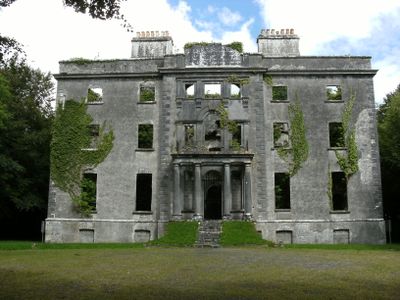
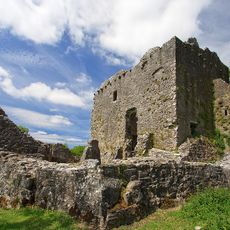
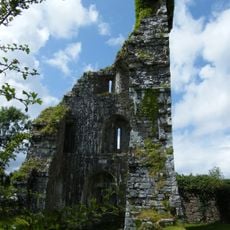
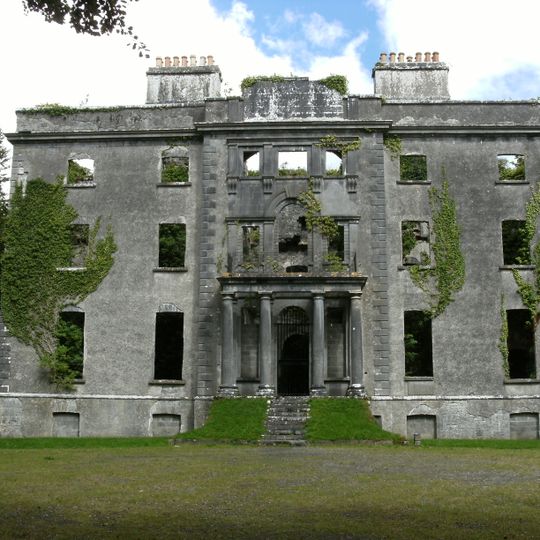
Moore Hall is a roofless Georgian ruin near Carnacon in County Mayo, built c. 1792–1795 to designs by John Roberts for wine merchant George Moore. Its grey stone facade is five bays wide and three storeys over a part-raised basement, with a full-height breakfront and a Doric portico above a gated arched doorway. Two chimney stacks with several pots stand on the jagged wall line, empty window openings flank the centre, and ivy covers much of the left side.
Moore Hall was commissioned by wine merchant George Moore and built to designs by architect John Roberts, completed between about 1792 and 1795. The Moore family, including novelist George Augustus Moore and Senator Maurice George Moore, used it as their main residence until the early 20th century. It stood vacant by 1921 and was burned in 1923 by Anti-Treaty IRA members because Maurice Moore was seen as pro-Treaty.
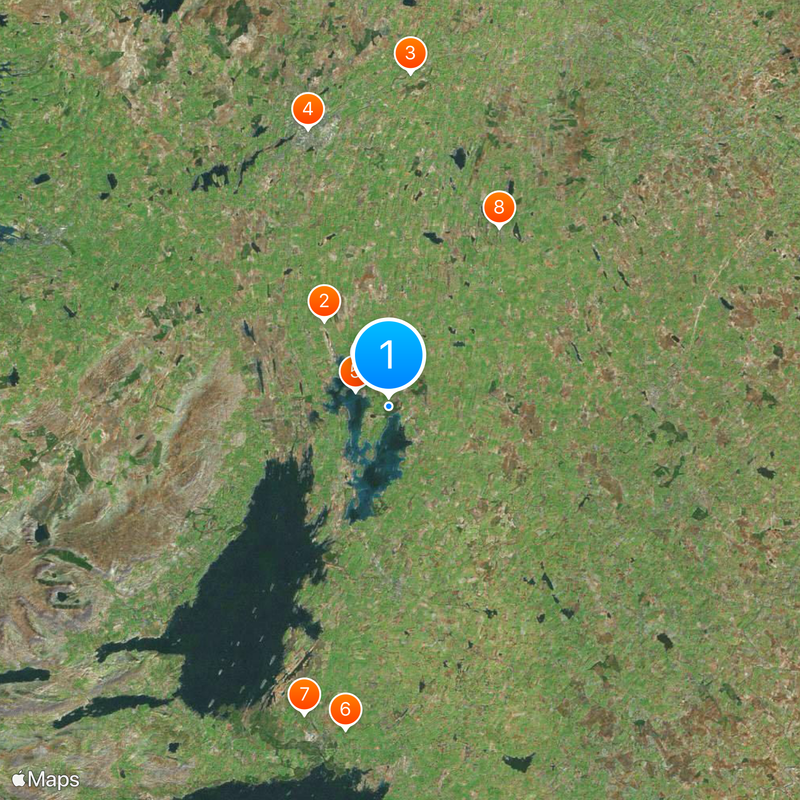
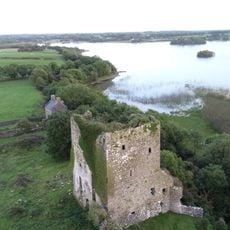
Moore Hall takes its name from the Moore family, whose members included the novelist George Augustus Moore. Writers of the Irish Literary Revival such as Lady Gregory, Maria Edgeworth and W. B. Yeats visited the house. The ruined shell stands on Muckloon Hill above Lough Carra, and the surrounding forested estate is now a public amenity.
The ruined house itself is not open to the public because of its condition; the surrounding forested estate is a public amenity with walking paths. Mayo County Council acquired the ruin and about 80 acres of woodland in 2018, while Coillte retained some 300 acres. A draft masterplan for the house and lands was published in March 2023.
During the Great Famine of 1846, owner George Henry Moore used his horse racing winnings to provide food for all tenants on the estate. This action set the family apart from many other landlords during that crisis.
The community of curious travelers
AroundUs brings together thousands of curated places, local tips, and hidden gems, enriched daily by 92,634 contributors worldwide.