Well of Harod, National park near Mount Gilboa, Israel
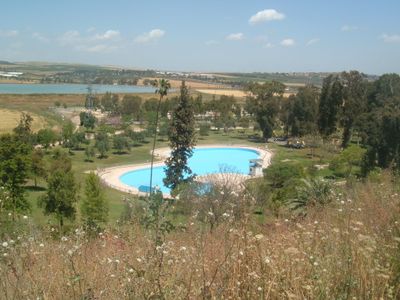
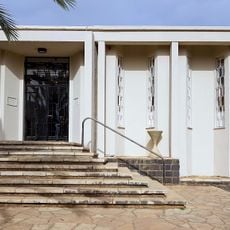
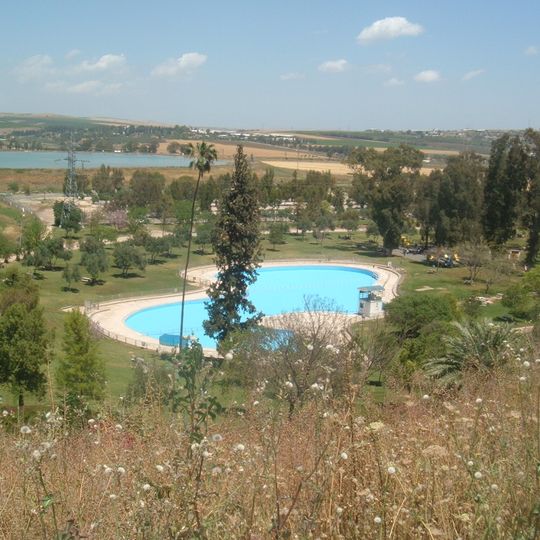
Ma'ayan Harod is a national park around an all-year spring at the northwest corner of Mount Gilboa, in the Harod Valley. The water rises in Gideon's Cave, 37 metres below sea level, and flows into a large pool with an ancient base, bordered by a pale stone rim. A low white poolside building with a blue and white front stands on the far side; a tall metal pylon rises among trees to the left.
The spring became historically significant in 1260 when it lay near the site of a major battle between opposing military forces. This clash reshaped the region's power dynamics for generations to come.
The Arabic name Ain Jalut, recorded since the 12th century, means "Spring of Goliath", while the Hebrew name En Harod means "spring of trembling", an allusion to the fear of Gideon's warriors. The spring is also called Gideon's Fountain, and the cave it rises from is Gideon's Cave.
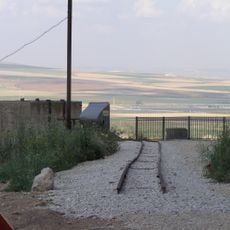
The spring flows year-round at about 360 cubic metres per hour, feeding the large pool beside the national park lawns. A path climbs from the spring to the Hankin House museum, and the grounds also hold a tent area and a caravan parking lot. The park sits south of Route 71, next to Moshav Gidona, between the Yizre'el and Navot junctions.
The Arabic name Ain Jalut, recorded since the 12th century, is commonly read as "Spring of Goliath", though some scholars link Jalud to Gilead, an older name for Mount Gilboa. The Hebrew name En Harod means "spring of trembling", an allusion to the anxious warriors in the Gideon story.
The community of curious travelers
AroundUs brings together thousands of curated places, local tips, and hidden gems, enriched daily by 94,119 contributors worldwide.