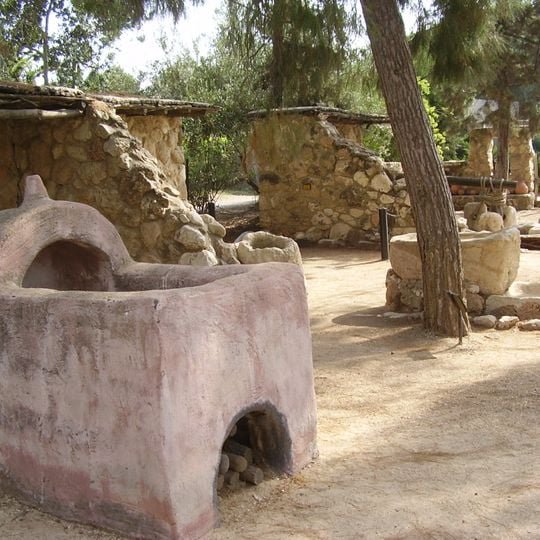
Ekron, Archaeological site in Jerusalem District, Israel
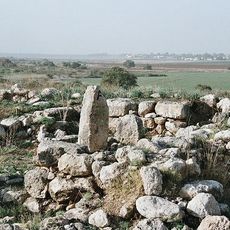
Ekron is a square tell at Tel Miqne, rising only a few metres above the fertile coastal plain on the grounds of Kibbutz Revadim. It consists of a small upper mound and a larger lower mound to the south. Excavations from 1981 to 1996 exposed a Philistine city with a 3 m thick brick wall and a temple complex of 57 by 38 m in Assyrian style.
Canaanite Ekron expanded around 1600 BCE, then its main public building burned in the 13th century BCE. Philistines refounded the city in the 12th century BCE; in 712 BCE Sargon II stormed it after its revolt and deported the ringleaders, reinstating Padi as governor. Babylonians destroyed the city at the end of the 7th century BCE.
The name Ekron appears in the Hebrew Bible as one of the five Philistine city lords' seats, and the city held a sanctuary of Baal-Zebub consulted by King Ahaziah (2 Kings 1:2). The 1996 find of the Ekron Royal Dedicatory Inscription, naming the city and five of its rulers, confirmed the identification of Tel Miqne with the biblical Ekron.
The site is open ground and can be reached on foot, but expect uneven surfaces underfoot. A visit usually takes one to two hours, depending on how thoroughly you want to explore the ruins.
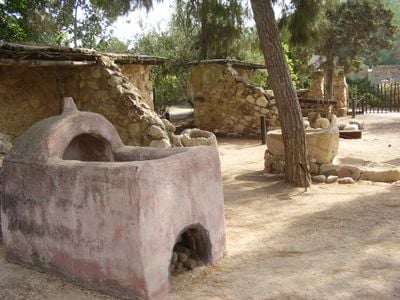
Excavations uncovered more than one hundred olive oil presses concentrated in a single industrial quarter. This arrangement shows that residents organized oil production as a communal task to process large quantities.
The community of curious travelers
AroundUs brings together thousands of curated places, local tips, and hidden gems, enriched daily by 94,290 contributors worldwide.