Kantara Bridge in Nahal Harod, Stone bridge in Beth Shean Valley, Israel.
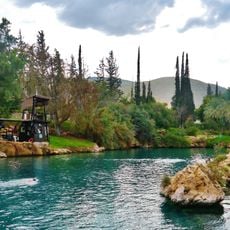
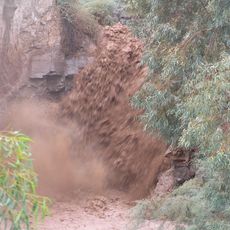
Kantara Bridge is a Mamluk-era stone aqueduct bridge over Nahal Harod in the Beth Shean Valley, about 2 km northwest of Beit She'an. It rests on three stone arches and carried water from the stream to fields north of it. The stream bank beside the bridge shows travertine terraces formed by water spilling from the channel over many years.
Built in the Mamluk period after the region was conquered in 1260, the bridge served as an aqueduct carrying water from Nahal Harod to fields north of the stream. During the early British Mandate it was restored and one ruined arch was repaired. After 1948 the water channel was renewed and supplied Kibbutz Sde Nahum's fields.
The name Kantara comes from the Arabic word qantara, meaning arch, a common term for arched bridges and aqueducts. The structure carried water from Nahal Harod to fields north of the stream, and after 1948 it irrigated the fields of Kibbutz Sde Nahum. Beside the bridge, the streambank shows travertine deposits formed by water spilling from the channel over many years.
The bridge is accessible by road and located near hiking paths that cross the valley, making it easy to reach by car or on foot. Visitors can walk across the structure and explore the surrounding trails to see other historical sites in the area.
Rather than simply spanning the stream, this structure carried an aqueduct system that transported water from distant sources to farmland throughout the valley. This dual purpose reveals how engineers ingeniously combined transport and water management in a single construction.
The community of curious travelers
AroundUs brings together thousands of curated places, local tips, and hidden gems, enriched daily by 93,885 contributors worldwide.