Palombo Gates, Iron gate sculpture in Jerusalem, Israel
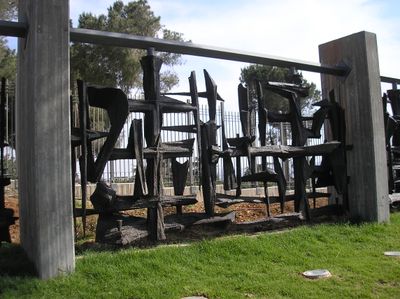
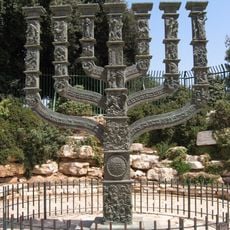
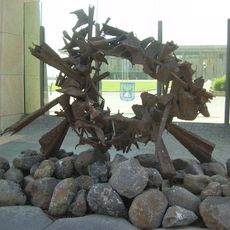
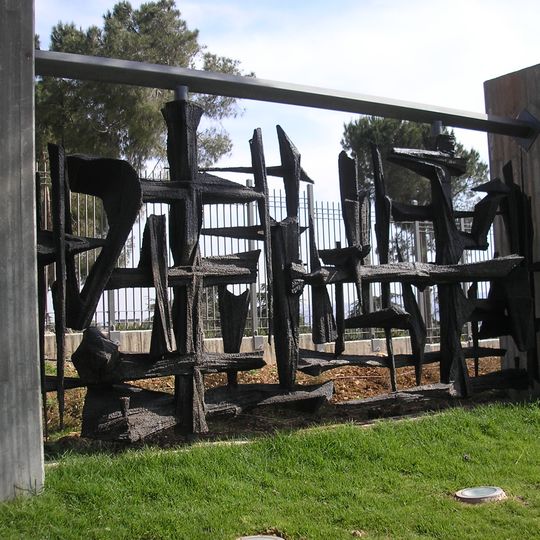
The Palombo Gates are six welded-iron gates, together about 17 metres long and 3 metres high, made of abstract forms. Sculptor David Palombo dedicated them to the memory of the Holocaust. They served as the entrance to the Knesset courtyard for about forty years, until they were replaced by glass gates in 2007 and placed beside them.
The Palombo Gates were created in 1966 by Israeli sculptor David Palombo. They emerged during a period of modern urban development when fresh artistic approaches began shaping the city's architectural character.
David Palombo dedicated the gates to the memory of the Holocaust; his wife Yona, an iron artist who worked on them with him, said they express the strength of a people that fought and built its first Knesset. She described the thistle motifs worked into the iron as part of that people's character. The entrance complex is named Bitan Palombo after the sculptor and the gates.
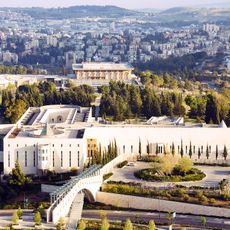
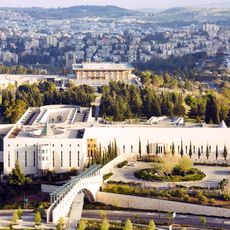
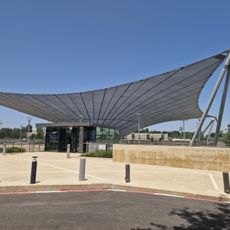
The gates now stand beside the newer glass gates at the Knesset entrance plaza and are no longer in use, so they are seen from outside rather than passed through. Entry to the Knesset building itself requires prior arrangement, but the plaza and the gates can be viewed without one. The Palombo foyer at the entrance is named after the sculptor and the gates.
Architect Joseph Klarwein disliked the gates and recalled that New Delhi's chief architect, seeing them, said they reminded him of Auschwitz. Sculptor David Palombo had dedicated the welded-iron gates to the memory of the Holocaust, and his wife Yona, who worked on them with him, described the thistles in the ironwork as part of the people's character.
The community of curious travelers
AroundUs brings together thousands of curated places, local tips, and hidden gems, enriched daily by 94,505 contributors worldwide.