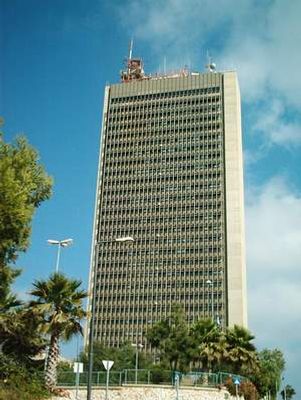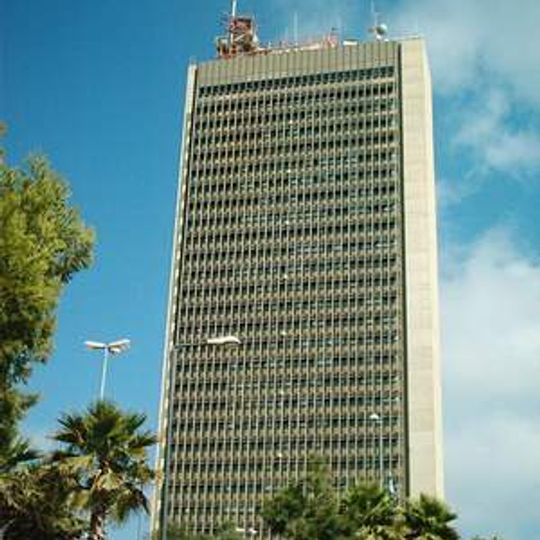
Eshkol Tower, Modern skyscraper in Haifa, Israel.
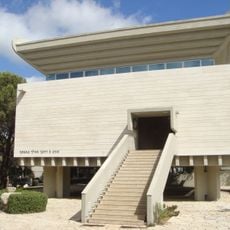
The Eshkol Tower is a 30-storey, 102-metre tower on the Haifa University campus atop Mount Carmel, its top reaching 597 metres above sea level. The narrow shaft, only 13 metres wide, rises from a broad horizontal base; the architect Shlomo Gilad developed the design after an idea by Oscar Niemeyer. It houses the university administration and an observation floor, with antennas on the roof.
Built between 1974 and 1978, the tower was originally proposed by Brazilian architect Oscar Niemeyer, whose design echoes his National Congress building in Brasília; the final plan was drawn up by Prof. Shlomo Gilad. Until 1989 it was the tallest university building in Asia, and until 2002 the tallest in Haifa, when Migdal HaMifras surpassed it. During the 1991 Gulf War, IDF forces used its roof to spot Scud missiles and direct rescue teams toward the Kiryot and the refineries.
The tower is named after Levi Eshkol, Israel's third Prime Minister, linking this building to the nation's political past. It has become a familiar landmark in the city's skyline that locals and visitors easily recognize.
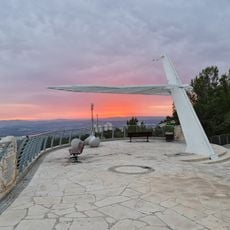
The tower stands on the summit of Mount Carmel on the University of Haifa campus, and its narrow 13-metre width makes it sway up to 40 centimetres per side in strong winter winds. For this reason the main entrance, located on the roof of the horizontal base building, is sometimes closed. The 30th floor holds an observation area; the roof carries antennas and transmission equipment.
During the 1991 Gulf War, Israeli forces positioned troops on the tower's roof to watch the entire Haifa Bay area; when Scud missiles hit the Krayot and near the refineries, they directed rescue forces to the sites. The 31st floor also gave its name to a 2000 article by Ilan Gur-Ze'ev in Theory and Criticism.
The community of curious travelers
AroundUs brings together thousands of curated places, local tips, and hidden gems, enriched daily by 94,112 contributors worldwide.