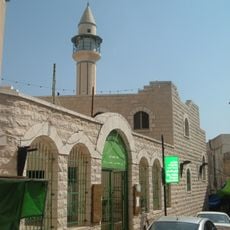
Seraya, Ottoman government building and mosque in Nazareth, Israel.
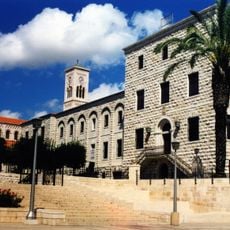
The Seraya is a two-storey stone building in Nazareth's Old City, built by Zahir al-Umar between 1730 and 1740. It held a harem wing for his household, a salamlik for receiving guests, a prayer room, a jail and stables. A portico was added to the upper floor in the mid-19th century, and a clock tower in Italian Renaissance style was built in the early 20th century.
The Seraya was built in 1740 by Zahir al-Umar, the autonomous Arab ruler of Galilee, who used it as his summer residence and the city's administrative center. The building later became the seat of the Municipal Council, connecting its origins under regional rule to modern governance.
The name Seraya comes from the Persian sarāy, meaning palace, and entered English through Turkish and Italian in the 16th century. Zahir al-Umar kept a prayer room in the building for Nazareth's Muslims, who had no mosque until the White Mosque was finished in 1812. The complex also held his haremlik living quarters and a selamlik for receiving guests.
The Seraya stands in the Old City of Nazareth, a few steps from the White Mosque, so it is reached on foot through the old lanes. The building is currently unused and closed while restoration and structural reinforcement work proceed, so visitors see the exterior: the 1857 portico and the early-20th-century clock tower. The municipality intends to turn it into a museum of the city's history.
The clock tower on the Seraya was added in the early 20th century in Italian Renaissance style, marking the 25th anniversary of Sultan Abdul Hamid II's accession. It was one of seven such towers built at the time, alongside those in Jerusalem, Jaffa, Haifa, Acre, Safed and Nablus.
The community of curious travelers
AroundUs brings together thousands of curated places, local tips, and hidden gems, enriched daily by 92,641 contributors worldwide.