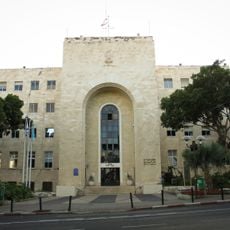
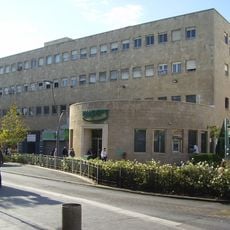
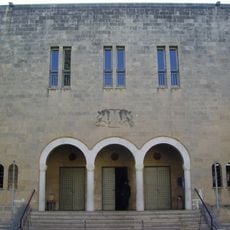
Al Pasha Complex, Haifa, Ottoman compound in Haifa, Israel.
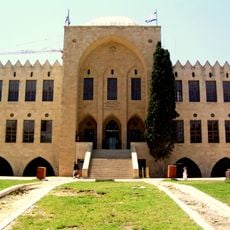
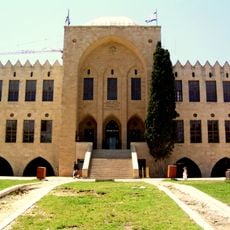
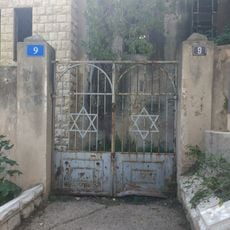
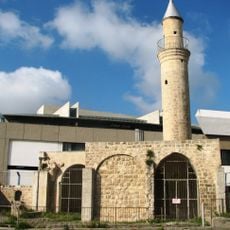
The Al Pasha Complex is a residential building paired with a traditional Turkish bath located south of Pal-Yam Boulevard in Haifa. The structure features preserved Ottoman architectural elements including arched doorways and decorative stonework throughout both buildings.
The complex grew around the residence of the wealthy Muslim al-Khalil family, whose members held Haifa's mayoralty for decades: Mustafa Pasha al-Khalil served from 1885 to 1903 and built the hammam east of and adjoining the family house. His son Ibrahim, mayor from 1911 to 1913, was murdered beside the house in 1937. The family owned the buildings until the 1948 war.
The street is named after Mustafa Pasha al-Khalil, mayor of Haifa from 1885 to 1903, who built the hammam beside his family's residence. His son Ibrahim al-Khalil, mayor in 1911–1913, was murdered near the house in 1937 by emissaries of the Mufti Haj Amin al-Husseini. The family had its own burial plot facing Faisal Square, at the junction of Derech HaAtzmaut and Derech Golani, with decorated tombstones and inscriptions.
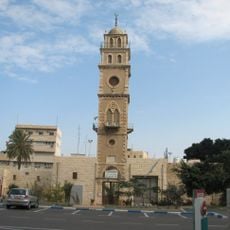
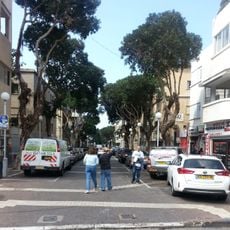
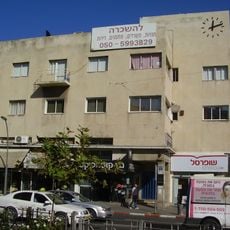
The complex stands on Hammam Al-Pasha Street, south of Pal-Yam Boulevard in Haifa's Lower City. The former Bama 2 hall and the club space are closed, and the hammam building no longer operates as a pub or nightclub. A café occupies the front facing Pal-Yam Boulevard, so the street frontage is the easiest part to see.
The theatre hall opened in April 1983 with Athol Fugard's play "The Island", starring Makram Khoury and Youssef Abu Warda. It had 181 seats and closed in 2003 with Samuel Beckett's "Endgame". The club space later became a dance club, Luna, which shut in February 2011.
The community of curious travelers
AroundUs brings together thousands of curated places, local tips, and hidden gems, enriched daily by 93,115 contributors worldwide.