The Grand Mills of Israel, Flour mill in Haifa, Israel
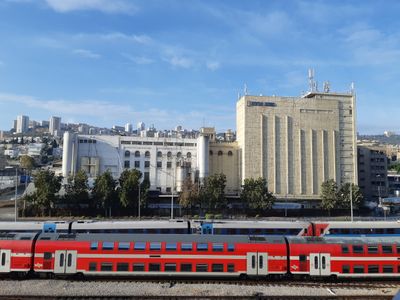
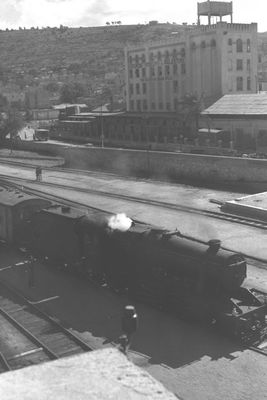
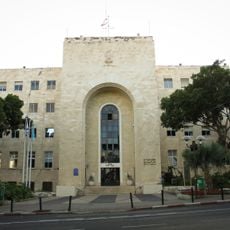
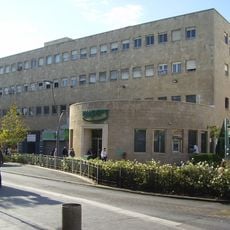
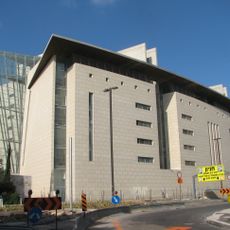
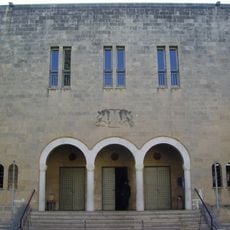
The Grand Mills of Israel is a flour mill on the main road of the Wadi Salib neighbourhood in Haifa, built between 1921 and 1922 to plans by the Hungarian-Jewish engineer Arpad Gut. Its pale beige concrete facade is divided into vertical panels by tall narrow recesses, and a dark band near the roofline carries the raised inscriptions "ממגורות ישראל" and "Grands Moulins d'Israel". Cylindrical silos and lower wings with arched windows stand beside it, and railway tracks run into the courtyard.
Baron Edmond James de Rothschild initiated the mill in 1921 to help farmers in Palestine sell their harvest at a fair price and to export produce abroad. The building, designed by Hungarian-Jewish engineer Arpad Gut on the main road of Wadi Salib, was begun in 1921 and finished by September 1922. In July 1923 new diesel engines drove the mill wheels, and a railway line ran into the courtyard for loading.
The mill served as a major workplace for many Haifa residents over generations, shaping the port area's identity through its presence and operations. The site remains tied to the local food production heritage that was important to the city's growth and daily life.
The site is visible from outside and shows its industrial architecture along Haifa's port area. The best time to visit is during daylight hours to see the building structures and the harbor beyond.
A matzah factory built by Solel Boneh opened beside the mill in 1925, and exports of matzah began that December. Preparing the mill for Passover in 1924 upset smaller mills that specialized in flour for the holiday, so the Chief Rabbinate left supervision to Haifa's rabbi, Baruch Marcus.
The community of curious travelers
AroundUs brings together thousands of curated places, local tips, and hidden gems, enriched daily by 93,328 contributors worldwide.