Elephanta Caves, Cave temple complex in Gharapuri, Mumbai Harbour, India
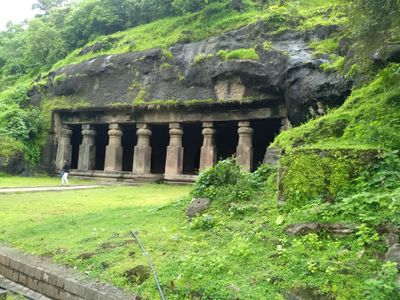
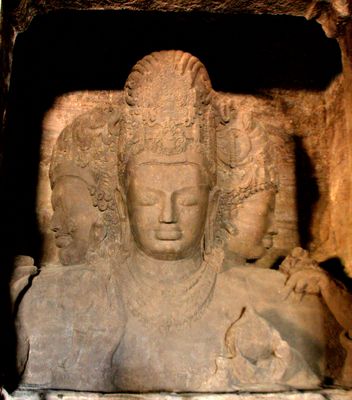
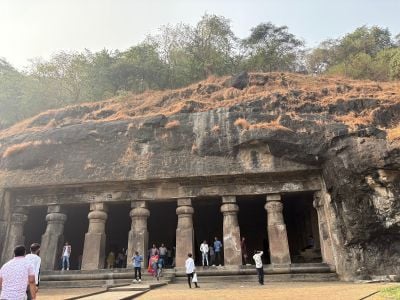
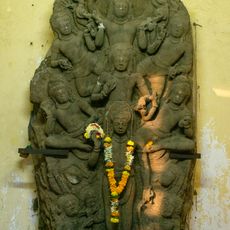
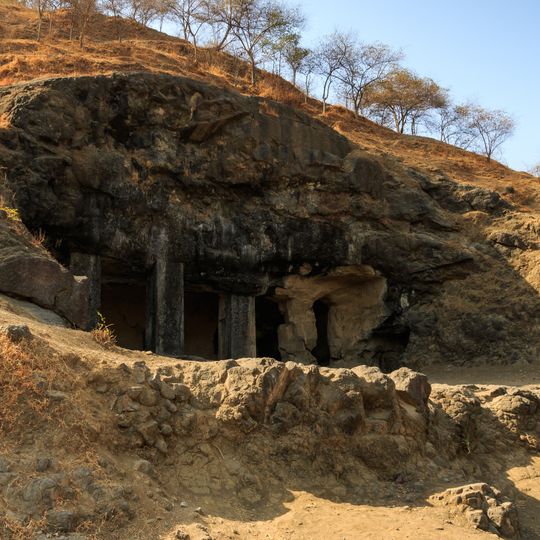
The Elephanta Caves are rock-cut temples hewn from solid basalt on Gharapuri (Elephanta Island) in Mumbai Harbour, Maharashtra. Cave 1, the Great Cave, is about 39 metres deep, with a square hall whose plan follows earlier Buddhist viharas; its north main entrance is small and two side entrances face east and west. The rear wall carries the 5.45-metre Trimurti Sadashiva in high relief, and the facade has thick square columns with cushion capitals.
The caves were carved between the 5th and 7th centuries CE, with many scholars dating their completion to about 550 CE; the Silhara dynasty (8100–1260) and the Rashtrakuta dynasty of Manyakheta are credited with parts of the work. The Portuguese, who found elephant statues on the island, gave the name Elephanta, and the main cave remained a Hindu place of worship until their arrival. British officials began preservation efforts in 1909, and the Indian government restored the monuments in the 1970s.
The name Elephanta comes from the Portuguese, who found stone elephant sculptures on the island; the local name Gharapuri means "city of the caves." The main cave was an active Hindu place of worship until the Portuguese arrived, after which worship ceased. The island's Gharapuri village lies on the south side.
Ferries leave from the Gateway of India in Mumbai for the island; the Great Cave, Cave 1, lies about a one-kilometre walk up a steep graded path from the landing. The caves are closed on Mondays. The five Hindu caves sit on the western hill, with Caves 6 and 7 near the eastern Stupa Hill.
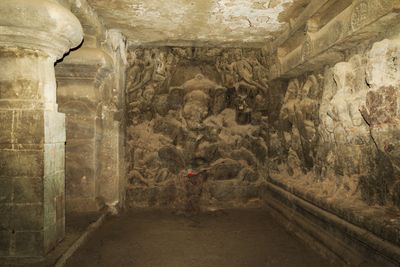
The site features a system of channels that drain rainwater from the caves during the monsoon season, preventing the sculptures from standing in water. Some walls still show traces of red pigment, indicating that the reliefs were once painted in color rather than existing as bare stone.
The community of curious travelers
AroundUs brings together thousands of curated places, local tips, and hidden gems, enriched daily by 92,114 contributors worldwide.