Heliodorus Pillar, Victory column in Besnagar, India
The Heliodorus Pillar is a single stone column at Besnagar, near Vidisha, carved with a bell-shaped lower section, a faceted middle merging into a round shaft, and a crowning emblem. Its Brahmi inscription, uncovered in 1909–1910 after ritual red paste was cleaned off, records a Garuda-standard dedicated to Vāsudeva.
The pillar was built around 110 BCE when a Greek ambassador named Heliodorus represented the Indo-Greek king Antialcidas at the court of the Sunga dynasty. This marks a key moment of contact between distant and local rulers.
Locals long called the pillar Khamba Baba, and when Alexander Cunningham reached it in 1877 it was encrusted with red vermilion paste and received ritual animal sacrifice, with a priest's house on the mound beside it. The name Heliodorus comes from the Brahmi dedication, which honours Vasudeva as deva deva, "God of Gods".
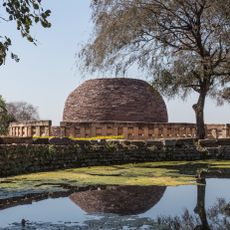
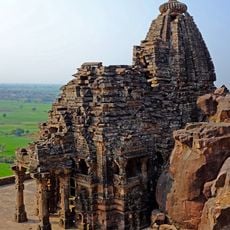
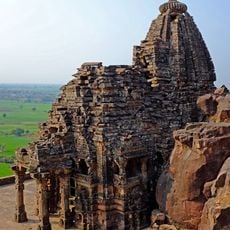
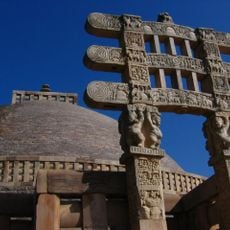
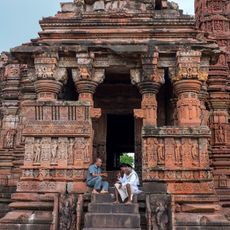
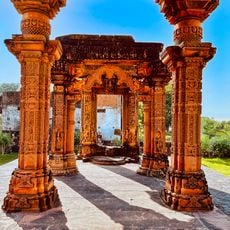
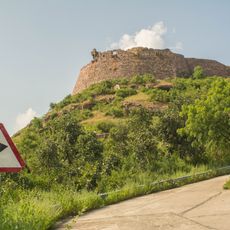
The pillar stands at Besnagar, 11 km from the Sanchi stupa and 4 km from the Udayagiri caves, about 60 km northeast of Bhopal. The site lies near the confluence of the Betwa and Halali rivers. The pillar is a protected Monument of National Importance, so access is from the roadside; check local opening arrangements before visiting.
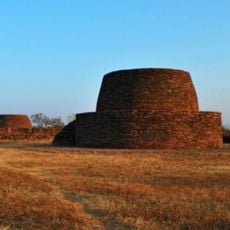
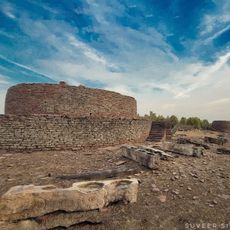
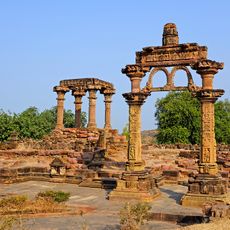
Archaeological digs revealed that the pillar formed part of an elliptical temple complex dedicated to Vasudeva, an early form of Krishna worship. This discovery shows how ancient religious practices developed at this location.
The community of curious travelers
AroundUs brings together thousands of curated places, local tips, and hidden gems, enriched daily by 92,643 contributors worldwide.