Tughlaqabad Fort, Medieval fort in South East Delhi, India
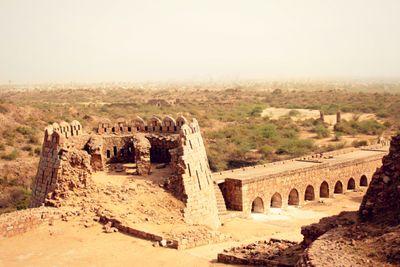
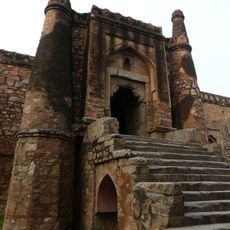
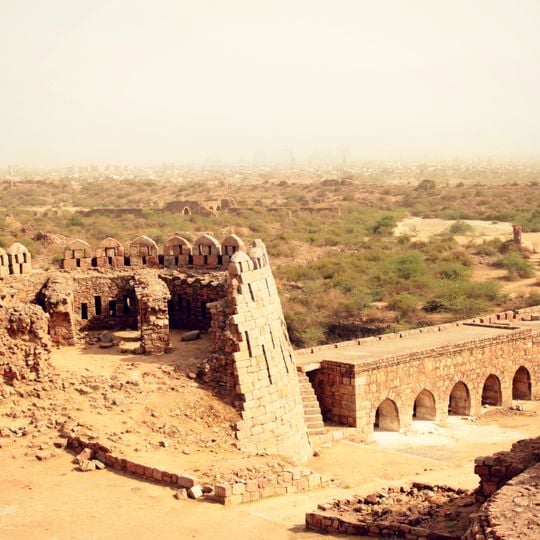
Tughlaqabad Fort is a ruined fortified city in South East Delhi, built from large tan and reddish-brown stone blocks. Its walls, 10 to 15 metres high, have crenellated tops with rounded battlements and are strengthened by circular bastions up to two storeys tall. A sloping stone buttress with vertical grooves descends to the ground, and a lower gallery of rounded arches stands to the right.
Ghiyasuddin Tughlaq ordered the construction of this stronghold in 1321 to protect the new capital of his dynasty. The settlement was abandoned after about 15 years, likely due to water shortages and strategic considerations.
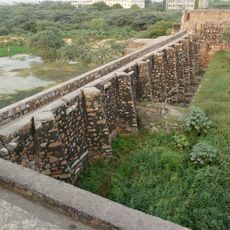
The tomb of Ghiyath al-Din Tughluq stands outside the fort, linked to its southern outpost by a 180-metre causeway on 27 arches over a former artificial lake. The name Tughlaqabad comes from the sultan's title and the Persian suffix -abad, meaning settled place. Inside the single-domed square tomb are three graves: the sultan's in the centre, with those believed to be his wife and son Muhammad bin Tughluq beside it.
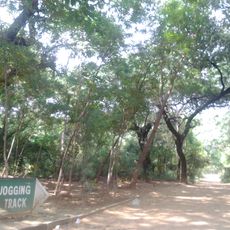
The site opens daily in the morning and closes in the evening; admission costs a few rupees for Indian nationals and a higher amount for international guests. The paths within the ruins are partly uneven and require sturdy footwear, and sun protection is advisable especially in hot weather.
The tomb of Ghiyath al-Din Tughluq stands outside the fort, linked to its southern outpost by a 180-metre causeway on 27 arches over a former artificial lake. The Mehrauli-Badarpur road later cut through part of it. The sultan also built that road, then called Qutub-Badarpur Road, to join his new city to the Grand Trunk Road.
The community of curious travelers
AroundUs brings together thousands of curated places, local tips, and hidden gems, enriched daily by 92,667 contributors worldwide.