Surajkund, Ancient reservoir and monument of national importance in Faridabad district, India.
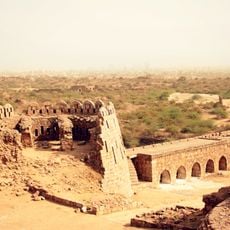
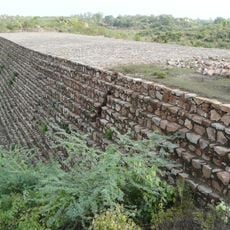
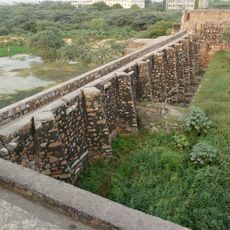
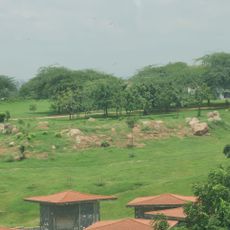
Surajkund is a semicircular reservoir whose embankment forms a wide, shallow amphitheatre of rough-hewn grey-brown stone tiers rising from a grassy floor. A small rectangular stone block sits in the middle of the grass, and a paved area of irregular flat stones lies below a low curved wall. The reservoir was built in the 10th century against the Aravalli hills.
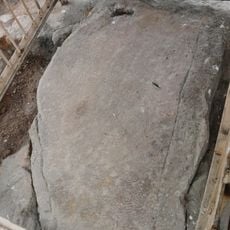
Surajkund is attributed to King Surajpal of the Tomara Rajput dynasty in the 10th century; some accounts name Surajmal, son of Anangpal I, and date the tank to 686 AD. A Sun temple stood on its bank, and carved stones recovered from the reservoir are linked to its ruins. Firoz Shah Tughlaq rebuilt its steps and terraces with stone in lime mortar between 1351 and 1388.
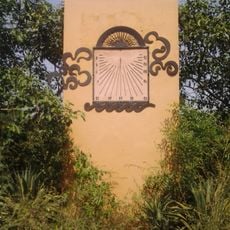
The name Surajkund means 'Lake of the Sun', linked to King Surajpal, a sun worshipper who built a Sun temple on the western bank. The annual Surajkund International Craft Mela, started by Haryana Tourism in 1987, fills the site each winter; its 2015 edition drew 1.2 million visitors, including 160,000 foreigners.
Surajkund lies about 8 km by road from South Delhi and 20 km from central New Delhi, near the villages of Badarpur and Lakkarpur. The semicircular embankment has a chord on its west side, so the stepped tiers face east toward the water. The stone steps are steep and there is little shade, so wear comfortable shoes.
The reservoir's name means "Lake of the Sun", and a Sun temple once stood on its bank, built by the sun-worshipping Tomar king Surajpal. Carved stones from the ruins were recovered from the reservoir, and some were reused in later restoration work.
The community of curious travelers
AroundUs brings together thousands of curated places, local tips, and hidden gems, enriched daily by 94,043 contributors worldwide.