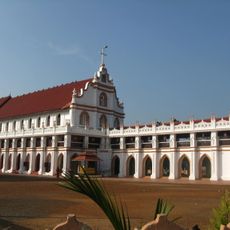
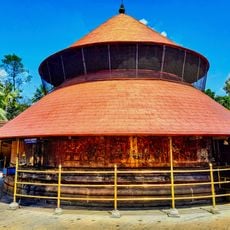
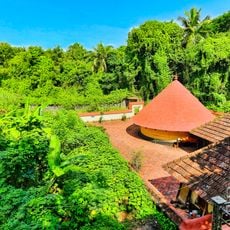
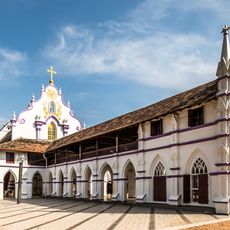
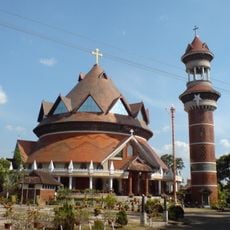
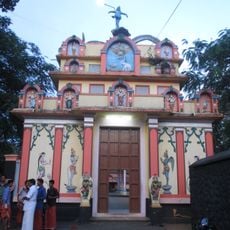
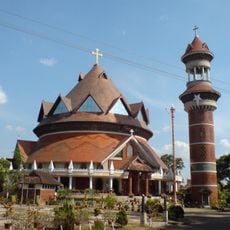
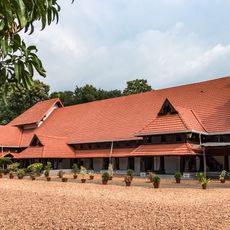
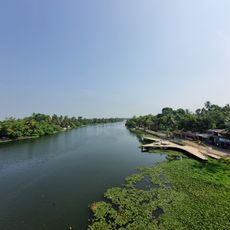
Vazhappally Maha Siva Temple, Hindu temple in Changanassery, India
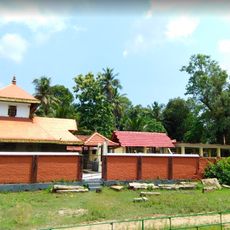
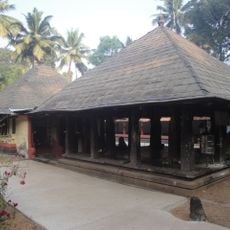
The Vazhappally Maha Siva Temple is a Hindu shrine in Changanassery featuring two nalambalams and two flag masts arranged around the central sanctum. The structure follows Kerala's traditional architectural style with symmetrically positioned ritual elements.
The temple was rebuilt and its rituals codified under the second Chera emperor Rajasekhara Varman (Cheraman Perumal, 820-844 CE), whose Vazhappally copper plate of about 832 CE is the oldest inscription found in Kerala. A Vattezhuttu inscription on the northern base of the shrine records that repairs were completed in Kollam Era 840 (1665 CE). Administration stayed with ten Brahmin families from Neelamperoor until the end of the 17th century.
The ten-day festival ends with arattu on Thiruvathira day in the Malayalam month of Meenam; Shivaratri falls in Kumbham, Vinayaka Chaturthi in Chingam and Navaratri in Kanni. The deity is worshipped as Thiruvazhappallyappan, and Parasurama is honoured daily in the nalambalam's agnikona corner. The temple's Ganapati appam, an offering of flattened rice cakes, takes its name from the consecration legend.
The temple stands in Vazhappally, near Changanassery in Kottayam district, and is run by the Travancore Devaswom Board. The main shrine is a round granite sanctum with Shiva facing east and Parvati facing west; Dakshinamoorthy and Ganapathi face south inside it. A second flag mast and nalambalam belong to the Ganapathi shrine, and the Kudashanthi Madom stands outside the eastern gopuram.
The Vazhappally copper plate, dated to about 832 CE and recovered from the Thalavana Mutt, is the earliest known inscription in Malayalam. Engraved in Vattezhuthu and Grantha scripts, it records a temple committee resolution issued in the presence of the Chera king Rajasekhara Varman.
The community of curious travelers
AroundUs brings together thousands of curated places, local tips, and hidden gems, enriched daily by 92,827 contributors worldwide.