Kavaledurga Fort, Hill fort in Thirthahalli, India
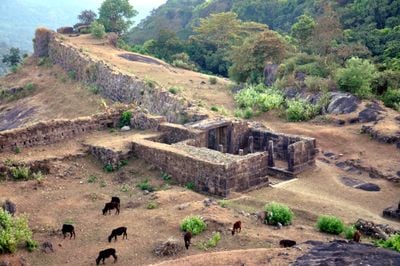
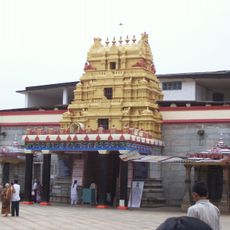
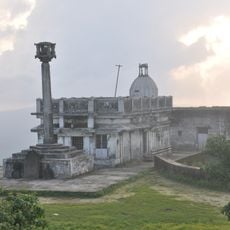
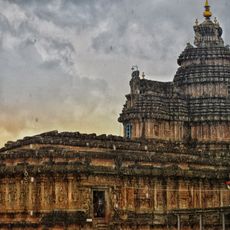
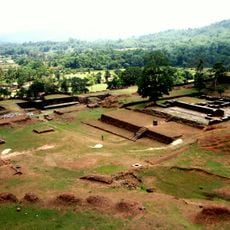
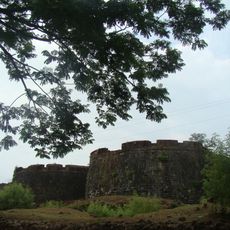
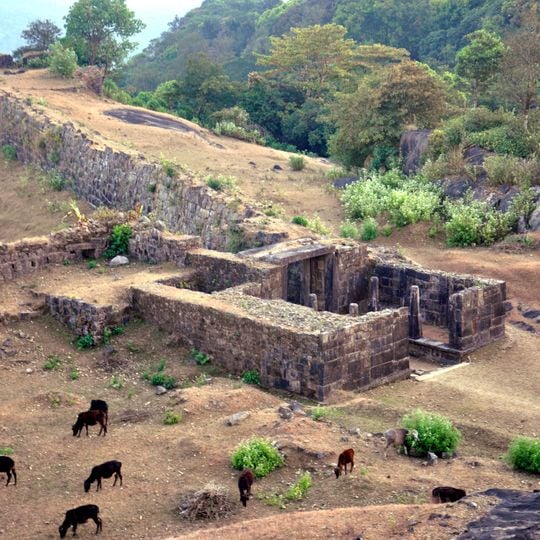
Kavaledurga is a hill fort 18 km from Thirthahalli in Karnataka, built of large granite blocks in three concentric lines of walls that follow the hill's contours. Each line has a gateway flanked by guard rooms. Inside are temple ruins, a ruined palace, and at the summit the small Shikhareshvara temple.
The fortress served as the fourth capital of the Keladi Kingdom during the 17th century and provided refuge for Rajaram, son of Chhatrapati Shivaji. Queen Chennamma defended the site against Mughal Emperor Aurangzeb's forces before it later fell to Hyder Ali and Tipu Sultan.
The name Kavaledurga is a Kannada contraction of Kavalu Durga, meaning watchtower fort, and the site was also called Bhuvanagiri Durga. The Keladi rulers built a Veerashaiva matha here, and seven tanks survive, matching the seven-hooded Naga sculpture near the Naga Tirtha tank. A monolithic seven-headed serpent about 6 feet tall stands by the second gateway.
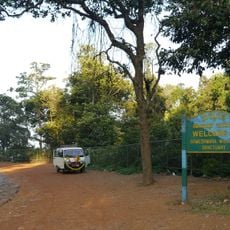
Access to the fort follows a trail about 1.2 miles (2 kilometers) long from the base, easiest to walk during dry weather. The months after the monsoon offer comfortable temperatures and good visibility for exploring the site.
The fort houses several old inscriptions in local languages visible on stone tablets along the walls. Some of the water tanks inside the fort still collect rainwater during the monsoon season, showing the original engineering methods.
The community of curious travelers
AroundUs brings together thousands of curated places, local tips, and hidden gems, enriched daily by 93,076 contributors worldwide.