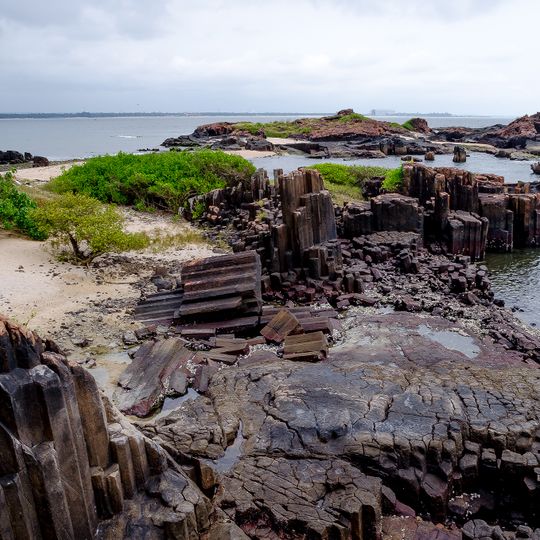
St. Mary's Islands, Rock formation at St. Mary's Islands, Karnataka, India
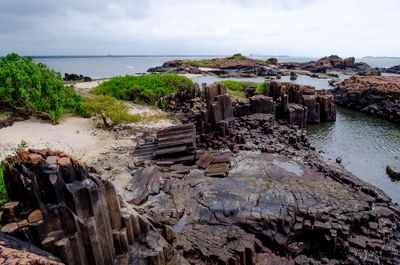
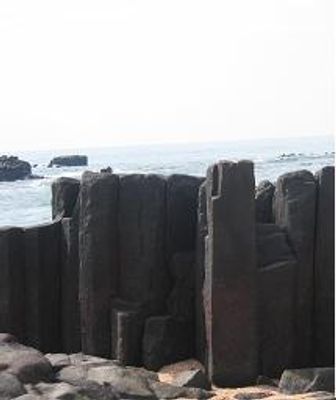
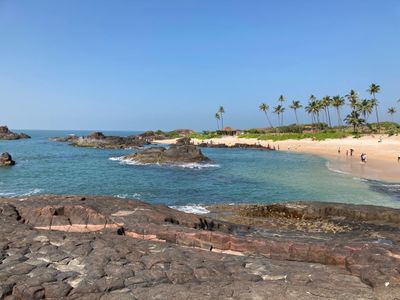
St. Mary's Islands is a group of four small islands off the coast of Malpe in Karnataka, known for their unusual basalt columns. The rocks form hexagonal patterns that spread across flat platforms and low cliffs, where the stone becomes visible at low tide.
The rocks formed around 88 million years ago through volcanic processes, when Madagascar separated from the Indian continent. European explorers reached the islands in the late 15th century during their first voyages along the western Indian coast.
The name comes from Portuguese sailors who landed here in the 15th century and named the place after religious beliefs. Fishermen from nearby villages still use the sheltered waters around the rock formation for their daily work at sea.
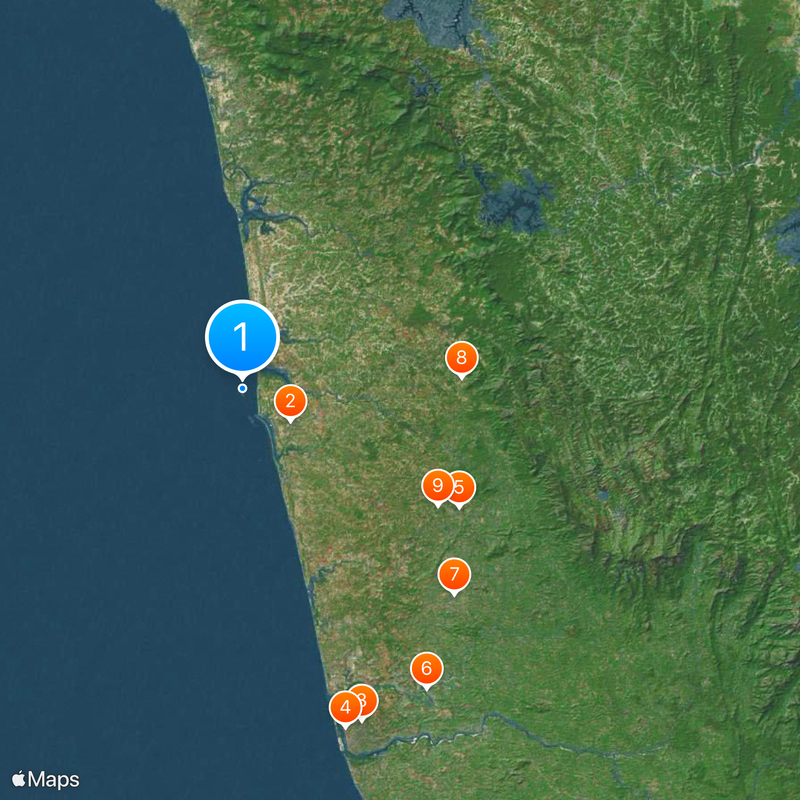
Ferries leave from Malpe Beach and bring visitors across in a short crossing, with boats running mainly during the cooler months from November to February. Tides affect how much of the rock formations is visible, so it helps to check the water level before going.
The hexagonal columns resemble structures found in only a few other places in the world, including the Giant's Causeway in Northern Ireland. At low tide, visitors can walk between the rocks and observe the geometric shapes up close.
The community of curious travelers
AroundUs brings together thousands of curated places, local tips, and hidden gems, enriched daily by 91,164 contributors worldwide.