Rajarani Temple, Hindu temple in Bhubaneswar, India
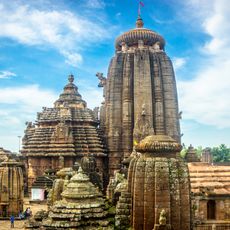
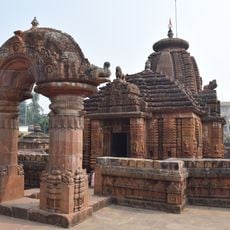
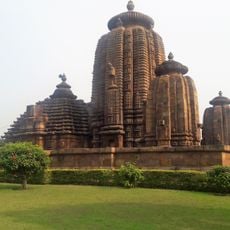
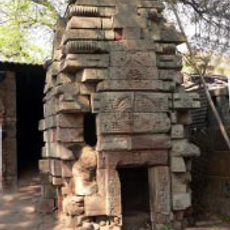
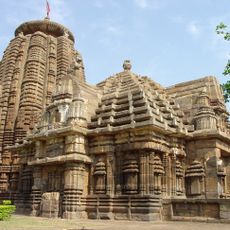
Rajarani Temple is a Hindu shrine built from sandstone rising to 18 meters in height with a central sanctuary and surrounding courtyard. The exterior surfaces feature intricate stone carvings of deities, women, and mythological tales carved across multiple sections.
The temple is dated to the mid-11th century CE on the basis of its sculptural and architectural style; Brown and S. K. Sarasvati (1953) place it around the 11th–12th centuries, between the Lingaraja and Mukteshvara temples. Fergusson alone proposed that construction began in 1105 CE. Scholars link its building to Somavamshi kings and queens who moved from central India to Odisha, and its towers resemble those of Khajuraho.
The name Raja Rani comes from the yellow and red sandstone, locally called raja and rani. The temple is nicknamed the "love temple" for its erotic carvings of couples, and its tall nayika figures appear turning from an ascetic, holding a tree branch, looking into a mirror, removing an anklet or playing an instrument. The Odisha Tourism Department holds a Rajarani music festival here every 18–20 January, giving Hindustani, Carnatic and Odissi music equal weight.
The temple is a ticketed monument maintained by the Archaeological Survey of India. It stands on a raised platform with three mouldings, so expect a few steps up. The jagamohana porch was repaired in 1903 after collapsing; its interior is plain and completed. The sanctum measures about 3.12 m square inside.
The sanctum holds no image, so the temple is classed as Shaivite only from its niches. The best-preserved carvings are the eight directional guardians (ashtadikpalas) on the central facade of the kanika, and the figure of Varuna is intact, noted for its body ornamentation, coiffure and facial expression.
The community of curious travelers
AroundUs brings together thousands of curated places, local tips, and hidden gems, enriched daily by 92,722 contributors worldwide.