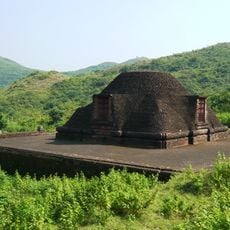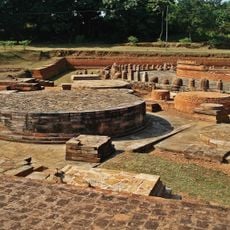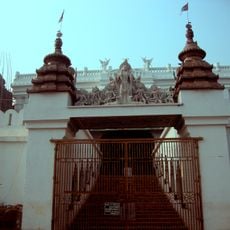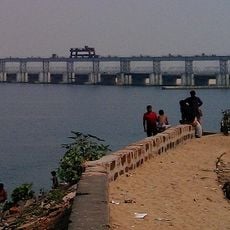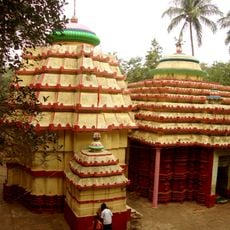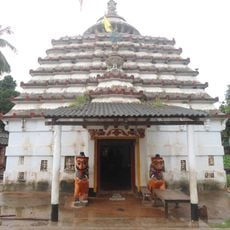
Pushpagiri, Buddhist archaeological site in Jajpur district, India.
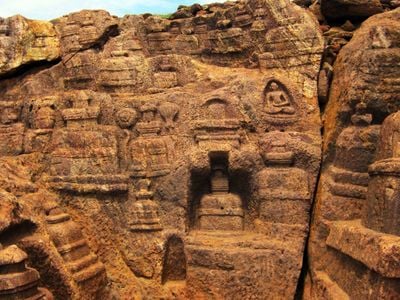
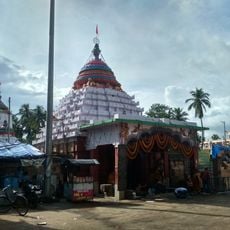
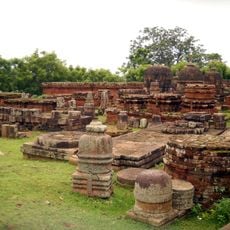
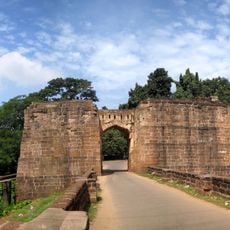
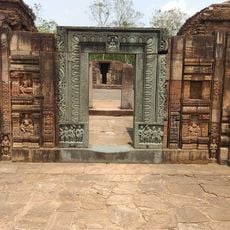
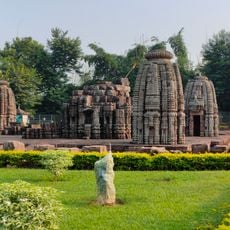
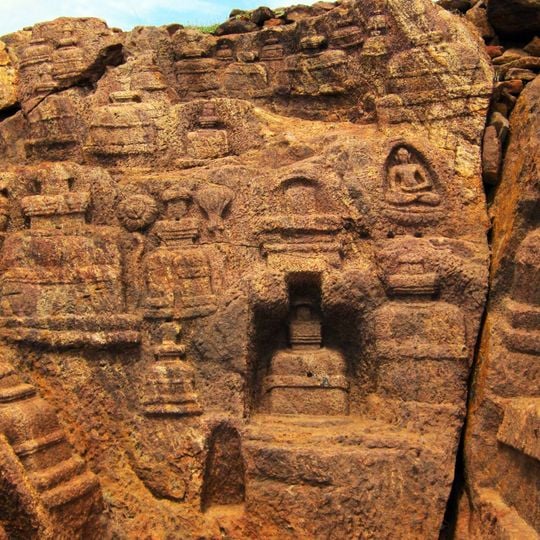
Pushpagiri is a Buddhist archaeological site atop Langudi Hill with the remains of stone stupas, rock-cut sculptures, and architectural features arranged across multiple levels. The ruins span several centuries of construction, showing how the site developed and changed over time.
The Chinese traveler Xuanzang visited this location in the 7th century and described it as a major Buddhist learning center operating alongside Nalanda and Vikramashila. Excavations from 1996 to 2006 revealed that the site was occupied and developed from the 3rd to 11th century.
The name comes from Brahmi inscriptions found during excavations, reading 'puṣpa sabhar giriya', which means flower-filled hill. This reveals how people once described what they saw when approaching this location.
The site is reachable from National Highway 5 via the towns of Jaraka and Chandikhol, which serve as access points. October through February offers the most pleasant weather for exploring the ruins without extreme heat.
Excavations uncovered rock-cut sculptures depicting the five Dhyani Buddhas, a feature rarely found at sites of this period. This visual representation offers insight into how local Buddhist beliefs were expressed through art.
The community of curious travelers
AroundUs brings together thousands of curated places, local tips, and hidden gems, enriched daily by 91,284 contributors worldwide.