Statue of Ahimsa, Jain statue in Mangi-Tungi, Nashik district, India
The Statue of Ahimsa is a 108-foot figure of Rishabhanatha, the first Jain Tirthankara, carved from a single rock on the Mangi-Tungi hills in Nashik district, India. Including its pedestal it reaches 121 feet, weighs 8,712 tonnes and covers 1,840 square feet. The dark grey stone shows a bare torso with arms at the sides, an unfinished top of the head, vertical striations on the legs and circular marks on the knees.
The Jain nun Gyanmati proposed the statue in 1996, and the foundation stone was laid in 2002. Carving began that year under chief engineer C. R. Patil, with Raveendra Kirti chairing the project, and removed more than 10,000 truckloads of rock. The work was completed on 24 January 2016, and Guinness World Records later certified it as the world's tallest Jain idol.
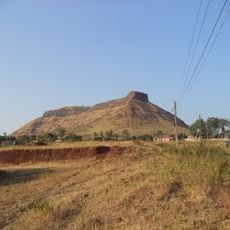
The name Ahimsa means non-violence, the principle the figure of Rishabhanatha embodies. Mangi-Tungi is one of four siddha kshetras in Maharashtra, hills where Jains hold that many monks attained liberation; the Hindi source adds that Rama and his army commander also reached moksha here. Marathi and Gujarati Jains form the main pilgrim following, and the Panch Kalyanak Mahotsav in February 2016 drew about 5,000 couples and over 100 Jain monks and nuns.
Visitors can see the monument throughout the day without paying admission. Hotels in the surrounding area offer accommodation for travelers who want to spend more time in the region.
The entire body was carved from a single continuous block, which required extraordinary craftsmanship. The location at over 1,300 meters (4,265 feet) elevation means the figure can be seen from far away on clear days.
The community of curious travelers
AroundUs brings together thousands of curated places, local tips, and hidden gems, enriched daily by 94,666 contributors worldwide.