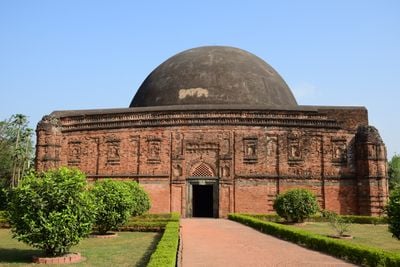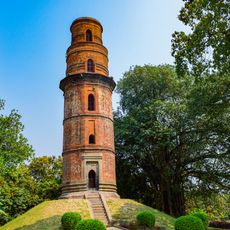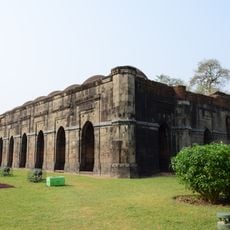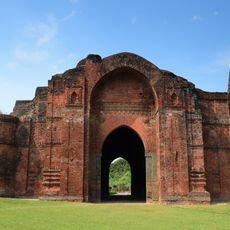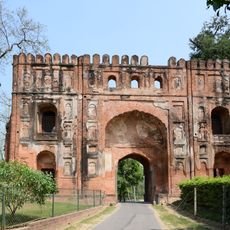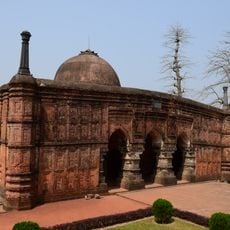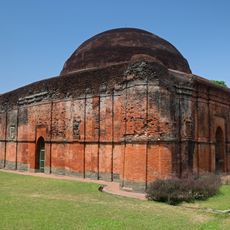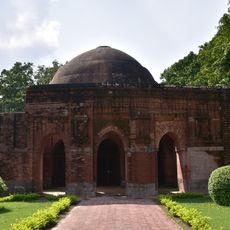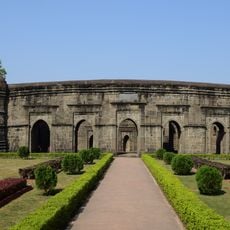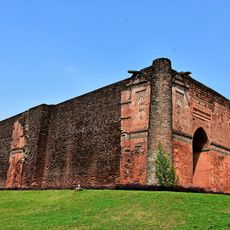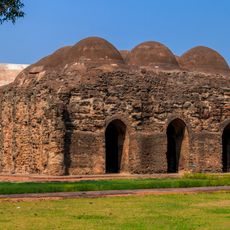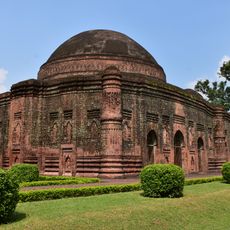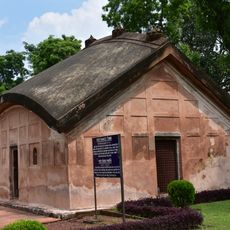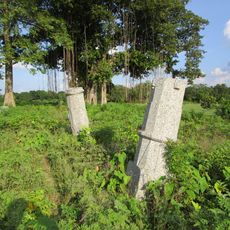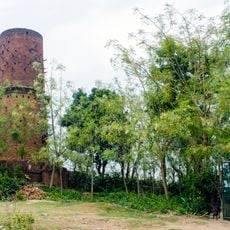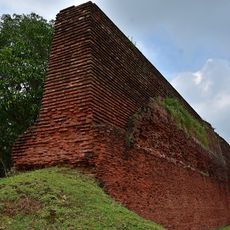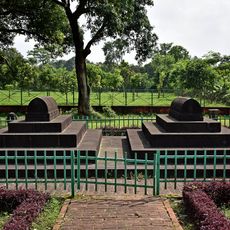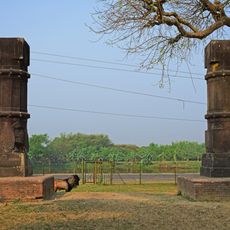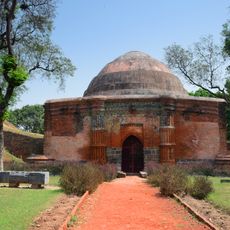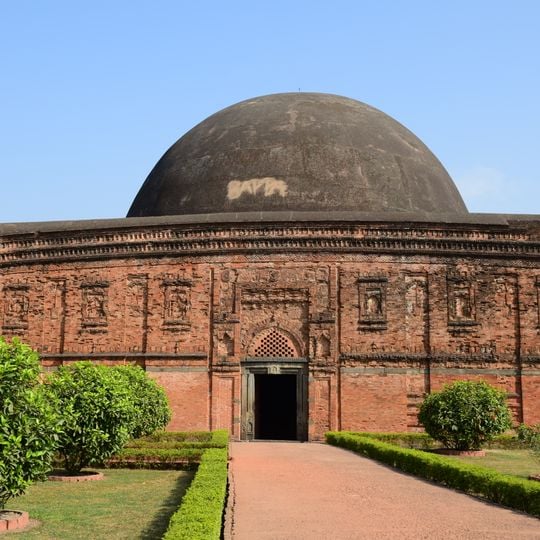
Eklakhi Mausoleum, 15th-century mausoleum in Kutub Sahar, India.
Eklakhi Mausoleum is a square structure topped with a single dome and thick brick walls reinforced with decorative terracotta details on its surfaces. Each of its four sides features entrance doorways with pointed arches leading to interior chambers.
Built around 1425, the structure houses three tombs including that of Sultan Jalaluddin Muhammad Shah, the last ruler of Pandua. Its construction method became influential in how later monuments were designed across the Bengal Sultanate.
The structure reflects local Bengali building traditions merged with Islamic construction methods, showing how different architectural styles came together in this region. This blend is visible in how the building is decorated and shaped overall.
The building can be accessed from multiple entry points on each side, making it easy to explore the exterior and view the decorative details. Visitors can walk around the structure to appreciate its proportions and observe the brick and terracotta work from different angles.
The name comes from a reference to the substantial cost of construction, marking this as a heavily financed project among early sultanate monuments. This initial investment established it as a benchmark for how later religious buildings would be designed and built.
The community of curious travelers
AroundUs brings together thousands of curated places, local tips, and hidden gems, enriched daily by 92,683 contributors worldwide.