Appennino Abruzzese, Mountain range in Abruzzo, Italy.
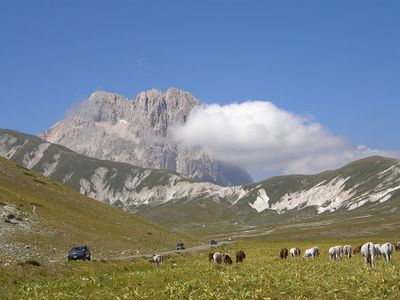
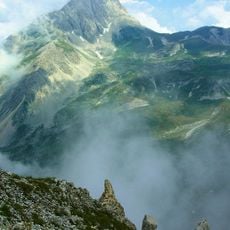
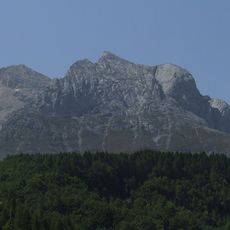
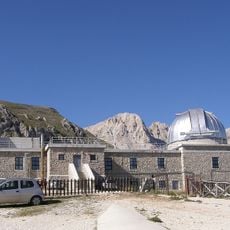
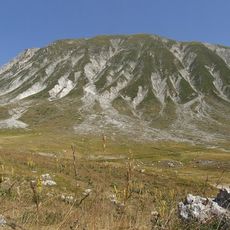
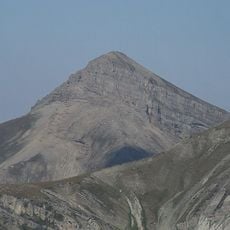
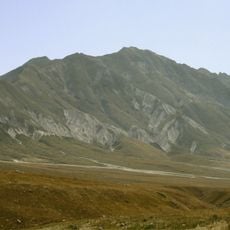
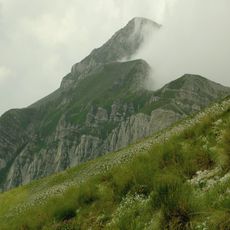
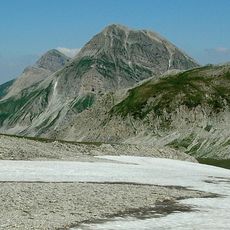
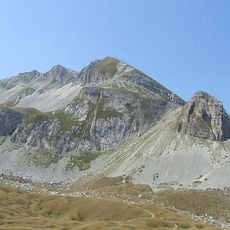
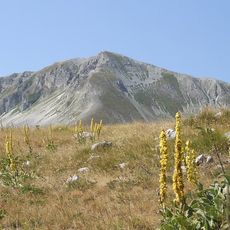
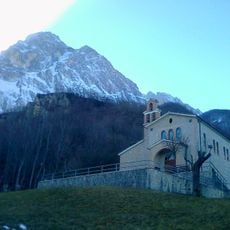
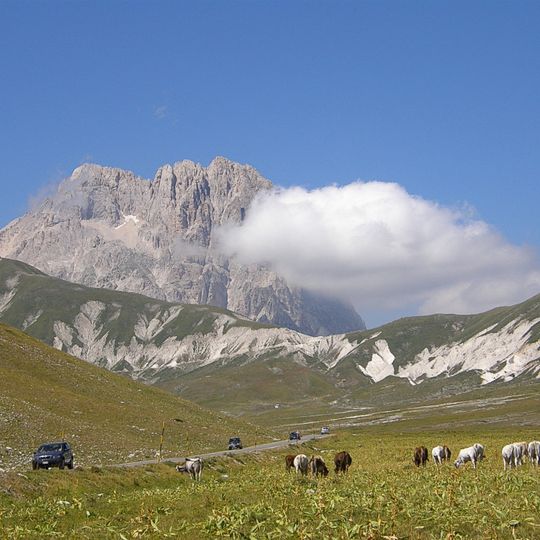
Appennino Abruzzese is a mountain range in the central part of the Italian peninsula, covering most of the Abruzzo region between the Adriatic coast and the plains near Rome. It is formed by limestone massifs, deep gorges, and wide upland basins, including Campo Imperatore, a broad plateau at around 5,900 feet (1,800 m) above sea level.
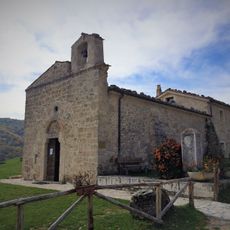
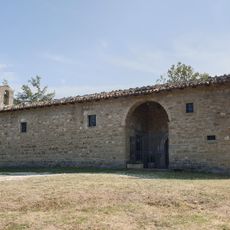
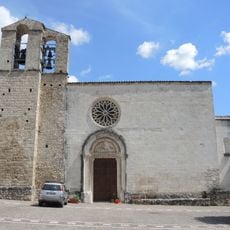
The mountains were home to Italic tribes such as the Samnites and Peligni long before Rome expanded into the region. In the medieval period, abbeys and fortified villages grew up along the valleys, and many of them are still standing today.
Shepherds in the villages along the range still practice transhumance, moving flocks to high pastures each summer as their ancestors did. Local markets in the valley towns sell sheep's cheeses and cured meats made by the same families who tend the flocks.
The main gateways to the range are L'Aquila to the west and the coastal city of Pescara to the east, both connected to the mountains by roads that lead into the valleys and up to the high plateaus. For walks above 6,500 feet (2,000 m), sturdy footwear is a good idea since the paths can be rocky or slippery depending on the season.
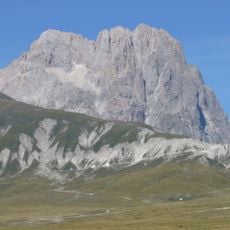
Deep inside Gran Sasso, the highest peak in the range, a particle physics laboratory runs experiments that need to be shielded from cosmic rays, using the rock above as a natural barrier. The same mountain was also used as a prison for Benito Mussolini in 1943, before his rescue by a German commando unit.
The community of curious travelers
AroundUs brings together thousands of curated places, local tips, and hidden gems, enriched daily by 90,754 contributors worldwide.