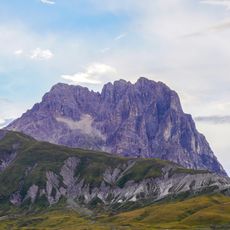
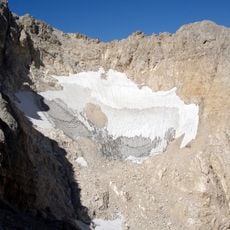
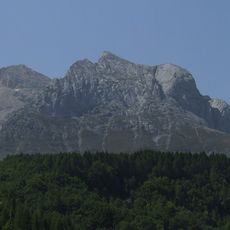
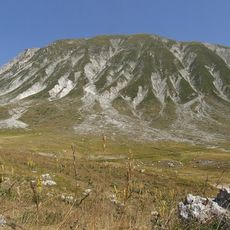
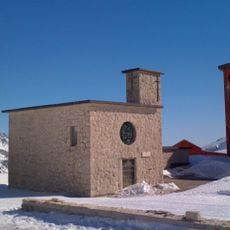
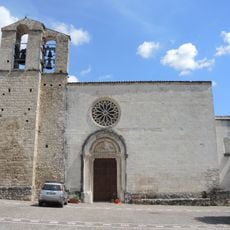
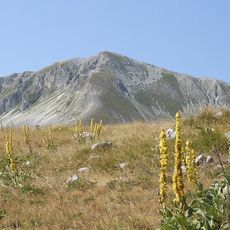
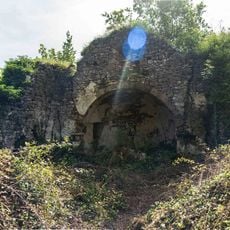
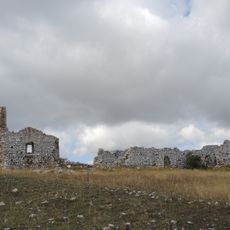
Campo Imperatore Astronomical Observatory, Astronomical observatory in Campo Imperatore, L'Aquila, Italy.
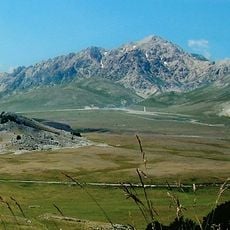
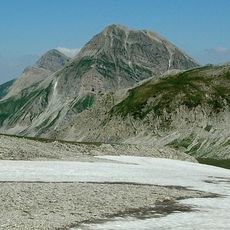
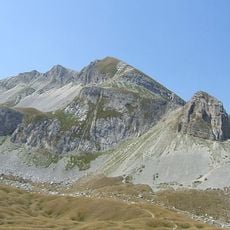
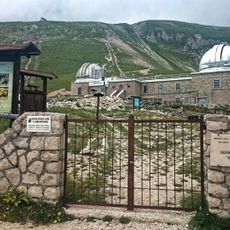
The Campo Imperatore Astronomical Observatory stands on the Campo Imperatore plateau at 2,200 metres in the Gran Sasso d'Italia. Its main instrument is the AZT-24, a 108 cm Ritchey-Chrétien reflector built for the Pulkovo Observatory, moved to Italy in 1995 and installed here in 1997. A Schmidt telescope with a 600 mm aperture, installed in 1958, occupies the western tower.
The idea of a mountain observing station on the Gran Sasso came from naturalist and politician Vincenzo Rivera and Giuseppe Armellini, director of the Monte Mario observatory in Rome; a 1946 expedition chose the Campo Imperatore plateau. Construction of the building and West Tower began in March 1948. The Schmidt telescope saw first light on 25 July 1958, and in the mid-1980s an East Wing and East Tower were added.
The station's name comes from the Campo Imperatore plateau, and its Russian nickname reflects the Pulkovo telescope installed there. Since 1994 a three-way agreement has linked the Rome, Teramo and Pulkovo observatories, with Russian observers still taking part in the SWIRT supernova programme. The Schmidt telescope, which saw first light on 25 July 1958, was among the first to use CCD detectors in the late 1980s.
The mountain road can be affected by weather and snow, especially in winter months, so checking road conditions before traveling is essential. Bring warm clothing as temperatures are significantly colder at this elevation than in the valley below.
The AZT-24, a 108 cm Ritchey-Chrétien reflector, was built for the Pulkovo Observatory and installed in the station's East Tower in 1997 under a 1994 three-way agreement between the Pulkovo, Rome and Teramo observatories. Its SWIRCAM camera, supplied by Teramo, works between 1.1 and 2.5 micrometres, making this Italy's only infrared telescope.
The community of curious travelers
AroundUs brings together thousands of curated places, local tips, and hidden gems, enriched daily by 93,427 contributors worldwide.