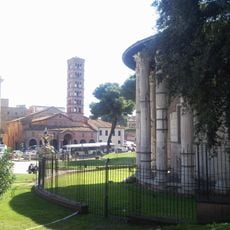
Santa Maria in Cosmedin, Minor basilica in Ripa district, Rome, Italy.
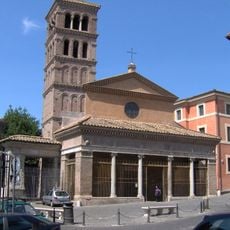
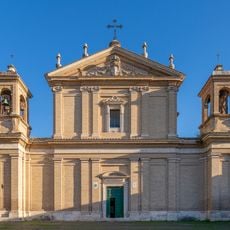
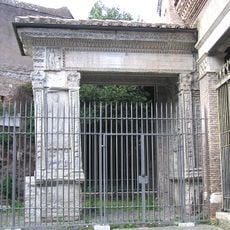
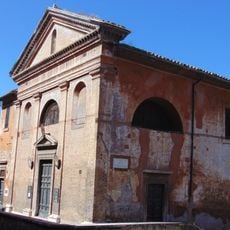
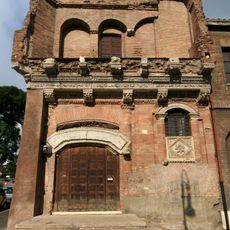
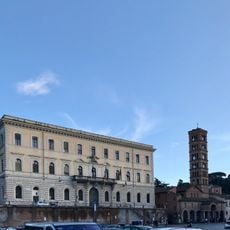
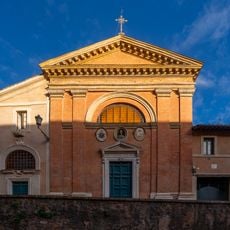
Santa Maria in Cosmedin is a basilica in the Ripa district near the Tiber, first built as a deaconry around 550 and rebuilt and extended by Pope Hadrian I around 780. Its pale brick and stone facade has a pitched roof and a central arched portico on two short columns, with three small arched windows above. A tall, slender brick bell tower, divided into stages by cornice bands, rises at the right of the facade. Inside, a flat marble floor of dark and light stone forms circular and geometric patterns; a row of tall arches on slender columns with carved capitals runs down the left side, and at the far end a low stone screen with a colonnade encloses the raised choir, with a mosaic in the curved apse above the altar canopy.
A welfare station for Greek refugees from the eastern Mediterranean stood here in the sixth century. Pope Adrian the First transformed the building into a basilica in the eighth century and gave it today's liturgical function.
The epithet Cosmedin comes from the Greek kosmidion, meaning ornament, and may recall the Monastery of Kosmidion in Constantinople, dedicated to Saints Cosmas and Damian. Monks fleeing that monastery after the Avar-Persian siege of 626 settled in Rome's Greek quarter and brought the name with them. The church still serves Rome's Melkite Greek Catholic community.
The church opens daily from half past nine in the morning until six in the evening with no entrance fee, clothing should cover shoulders and knees. Several bus lines stop within walking distance, the square sits directly on a busy intersection south of the Roman Forum.
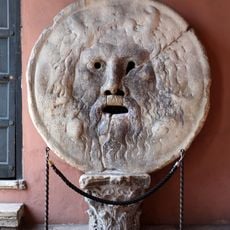
The portico shelters the Bocca della Verità, an ancient marble disc with a face that legend says bites off the hands of liars. Tourists often queue to place their hand inside the mouth of the mask and take a photo.
The community of curious travelers
AroundUs brings together thousands of curated places, local tips, and hidden gems, enriched daily by 94,669 contributors worldwide.