Casa dei Crescenzi, Medieval house in Rome, Italy
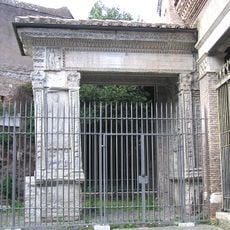
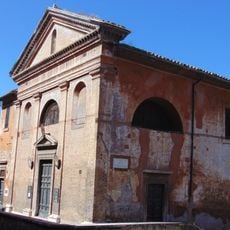
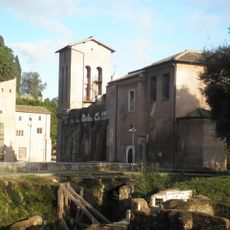
Casa dei Crescenzi is a small medieval house in Rome that incorporates recycled ancient Roman artifacts and architectural elements into its stone facades and arched windows. The structure displays various reused columns, capitals, and marble blocks that are clearly integrated into its walls.
Niccolò, son of Crescenzio and Teodora, built the house between 1040 and 1065 to control the old mills of Rome and the Ponte Emilio, where his family charged a toll. The tower that gave it the name Tor Crescenzia collapsed in 1312 during the conflicts around Henry VII's arrival, leaving only the house standing. Abandoned in the 15th century, it later served as a stable with an adjoining hayloft, was bought by the papal government in 1868, and was restored by the city in 1939.
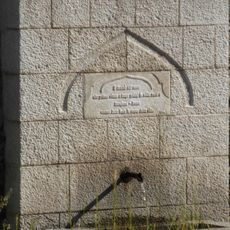
Niccolò di Crescenzio dictated the long Latin inscription on the entrance portal, declaring that he built the house not from vain glory but to renew the ancient beauty of Rome. The text also plays on the word mansio, meaning a stopping place, which gave the building the name Tor Monzone. Two shorter inscriptions address passers-by as Quirites, the old name for Roman citizens.
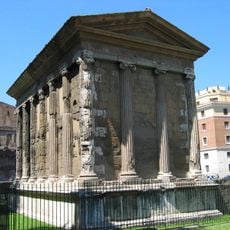
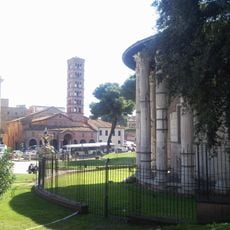
The building is usually closed to the public and can only be visited on special occasions or by appointment. Its exterior stands on Via Luigi Petroselli between the Temple of Portunus and the Palazzo dell'Anagrafe, near Piazza Bocca della Verità.
The house's later name, Casa di Pilato, comes from its role in Via Crucis processions, where it stood in for the house of Pontius Pilate. A Latin inscription on a small window beside the portal reads that the effigy shows who built it, and another mid-facade inscription addresses passers-by as Quirites.
The community of curious travelers
AroundUs brings together thousands of curated places, local tips, and hidden gems, enriched daily by 93,470 contributors worldwide.