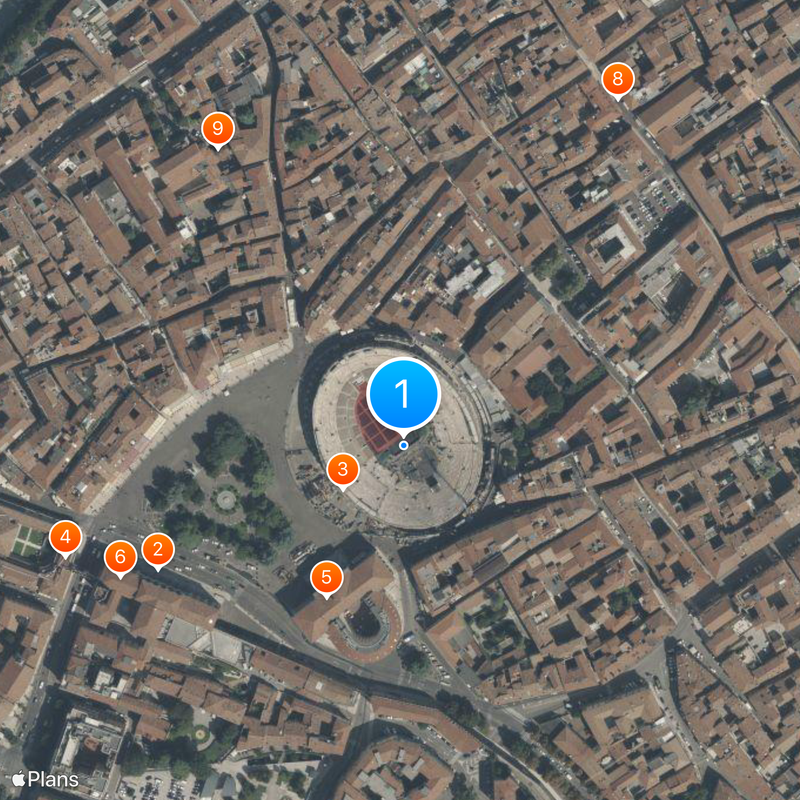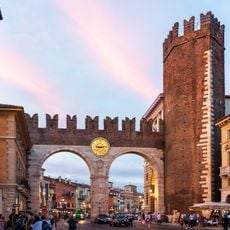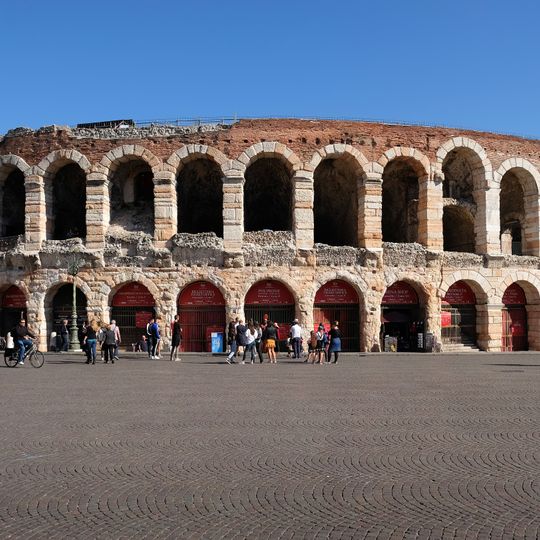
Arena di Verona, Roman amphitheater in Piazza Bra, Verona, Italy
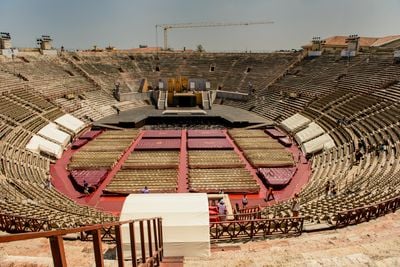
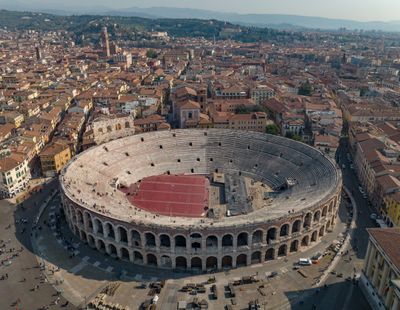
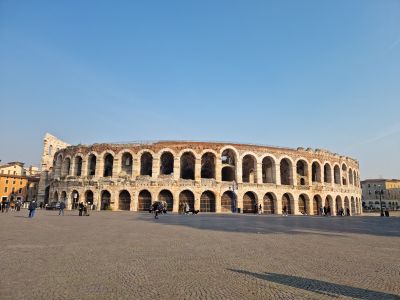
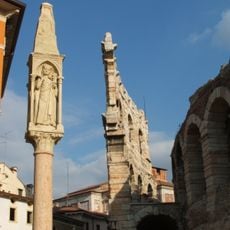
The Arena di Verona is a Roman amphitheatre in the historic centre of Verona, built of pale grey and beige stone with brick visible in places. Its outer facade is an arcade of stacked round arches, while inside many narrow, steep rows of seating divided by radial passages rise around a flat arena floor.
The structure was completed in 30 CE outside the city walls at that time and served first as a site for gladiatorial contests and public games. In 1913, it began its use as an opera house with a performance of Aida, marking the start of the festival tradition that continues through today.
The stage in the center is built fresh each year for the summer performances, often with monumental sets that use the oval shape. Audiences sit on the same stone steps that Roman visitors used nearly two thousand years ago.
Visitors attending a performance should bring comfortable shoes and a seat cushion for the hard stone steps, especially for events lasting several hours. The upper rows offer a good overview of the entire oval, while lower seats are closer to the action.
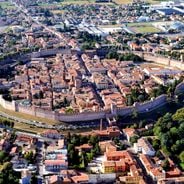
In 312, Constantine's troops besieged Maxentius inside Verona, and the fighting centred on the amphitheatre, which the defenders used as a bastion because it stood higher than the walls of Gallienus. The episode is carved on the Arch of Constantine in Rome, where the right-hand stretch of wall is thought to be the section enclosing the Arena.
The community of curious travelers
AroundUs brings together thousands of curated places, local tips, and hidden gems, enriched daily by 92,282 contributors worldwide.