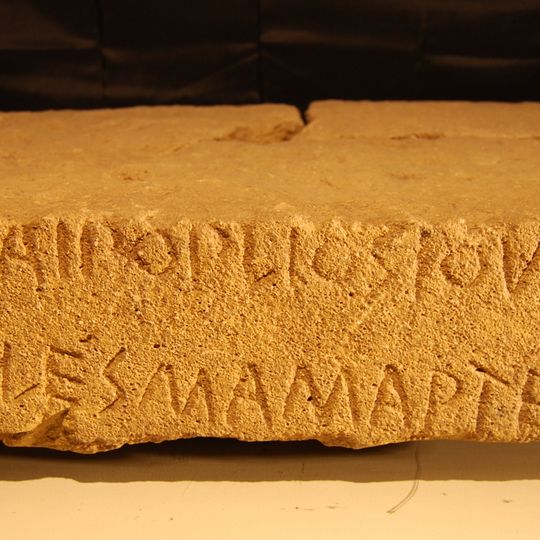
Lapis Satricanus, Ancient inscription stone in Satricum, Italy
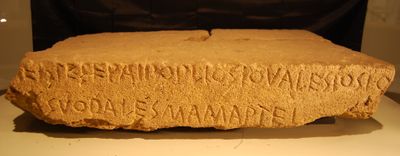
The Lapis Satricanus is a yellow stone bearing an inscription in archaic Latin, discovered in Satricum. It was originally reused as building material in an ancient temple before being found during archaeological work.
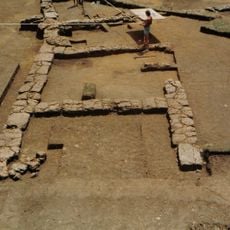
The stone dates to the late 6th or early 5th century BC and was discovered in 1977 during excavations led by C.M. Stibbe. The find records a moment when Rome was forming as a community and creating its earliest written records.
The inscription names a group of companions dedicated to Mars, showing how early Roman people expressed their religious beliefs through stone. The mention of Publius Valerius reveals that certain families held standing in their communities.
The piece displays word endings in archaic form that differ from later classical Latin, making it primarily valuable for those studying ancient languages. Visitors should allow time to examine the carvings closely and trace the ancient script carefully.
The text is one of the oldest known Latin inscriptions and provides insight into Rome's early language before it took classical form. This makes it a valuable window into how ancient speech evolved over centuries.
The community of curious travelers
AroundUs brings together thousands of curated places, local tips, and hidden gems, enriched daily by 90,799 contributors worldwide.