Superga, Natural hill and religious site near Turin, Italy
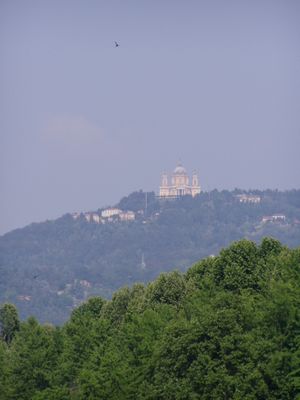
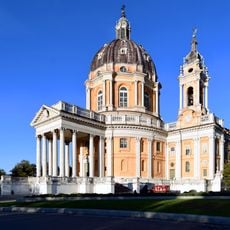
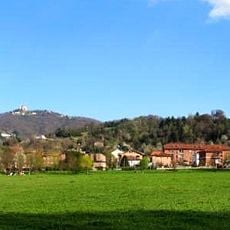
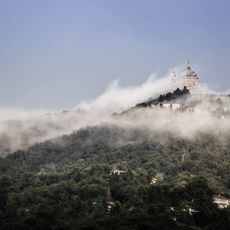
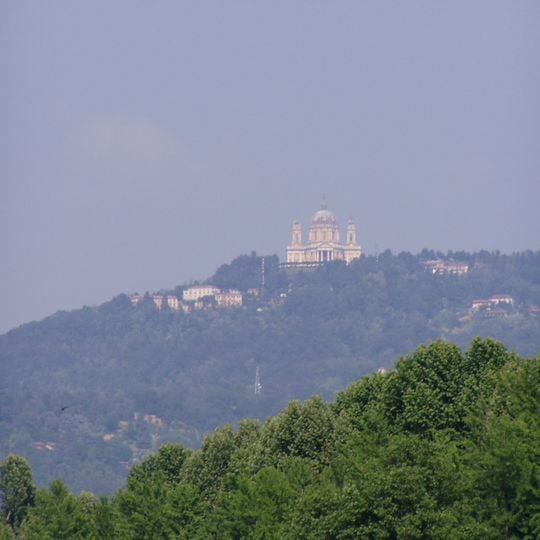
Superga is a hill on the south bank of the Po east of Turin, reaching 672 metres, the third-highest summit of the Colline del Po. Its crest is crowned by Filippo Juvarra's basilica, finished in 1731: a ribbed dome on a drum with a lantern, flanked by two slender bell towers with domed caps, above a colonnaded front with a triangular pediment. The pale stone and stucco complex stands against dense green woods, with smaller pale buildings lower on the slope.
Vittorio Amedeo II vowed in 1706, during the French siege of Turin, to build a church on the hill; the first stone was laid in 1717 and Filippo Juvarra's basilica opened on 1 November 1731. On 4 May 1949 a plane carrying the Grande Torino football team crashed behind the basilica, killing 31 people.
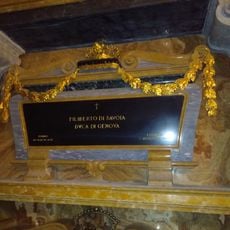
The name may come from Santa Maria sub pérgula, a Madonna statue once sheltered under a pergola, before which Vittorio Amedeo II vowed to build the basilica in 1706; the statue is kept in the Cappella del voto. The church is the traditional burial place of the House of Savoy, and its crypt also holds the tombs of the Grand Masters of the Sovereign Military Order of Malta.
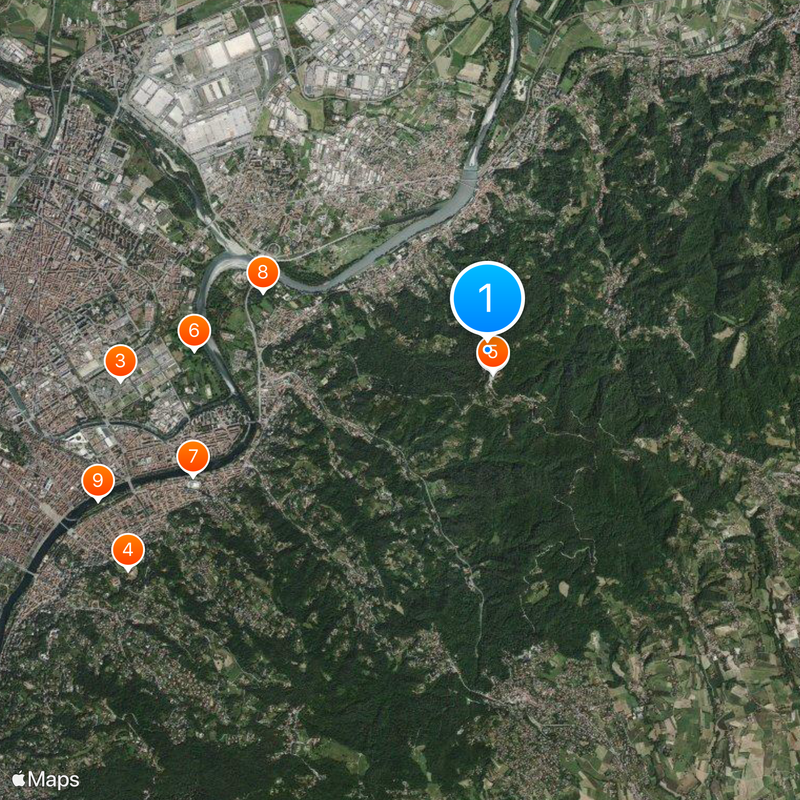
The Sassi–Superga rack railway, built in 1884 for the Italian General Exhibition, climbs about 3 km from Borgata Sassi to the basilica; the funicular traction was replaced by electric traction in 1934 and the line reopened in 1986. A road from the Sassi area also reaches the summit, and walking routes cross the wooded slopes.
On 4 May 1949 at 17:03, the plane carrying the Grande Torino football team crashed into the embankment behind the basilica in low visibility, killing all 31 people on board as they returned from a friendly against Benfica in Lisbon. A memorial stands at the base of the church, and the site is still used for commemorations.
The community of curious travelers
AroundUs brings together thousands of curated places, local tips, and hidden gems, enriched daily by 94,959 contributors worldwide.