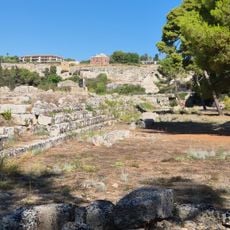
Greek Theatre of Syracuse, Greek theatre in Syracuse, Italy
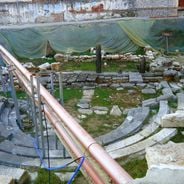
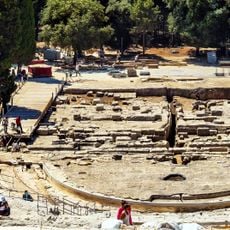
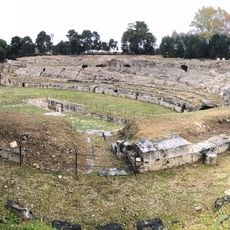
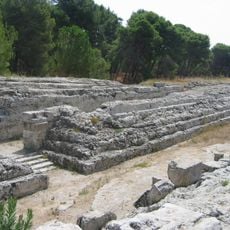
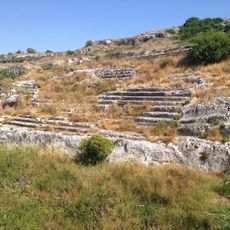
The Greek Theatre of Syracuse is carved directly into Temenite Hill, forming a semicircular auditorium that once seated around 16,000 spectators. The structure includes an orchestra area at its center and rows of stone seating that rise up the hillside.
The theatre was first built in the 5th century BC on the south slopes of Temenite Hill. It was rebuilt between 238 and 215 BC under Hieron II, when the cavea reached 138.6 metres in diameter with 67 rows of seating. In the early Augustan period the cavea was reshaped into a semicircle and the orchestra enlarged from 16 to 21.40 metres.
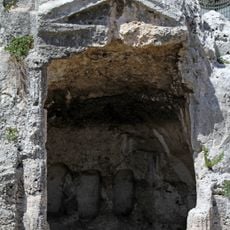
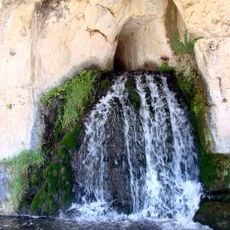
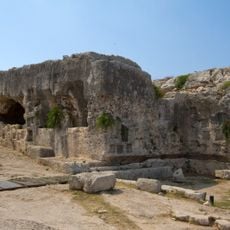
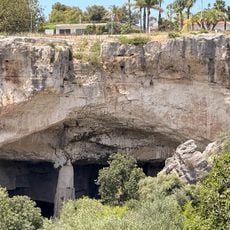
The theatre's name comes from the Greek theatron, the viewing place, and its seating sectors were inscribed with the names of gods and royalty: Olympian Zeus, Herakles, Hieron II, his wife Philistis, his daughter-in-law Nereis and his son Gelo II. Above the cavea, a rock-cut terrace held a nymphaeum whose basin fed the theatre's water system; it may be the Mouseion, sanctuary of the Muses and seat of the actors' guild.
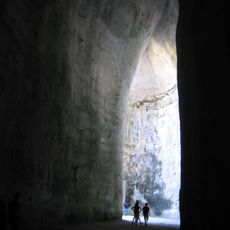
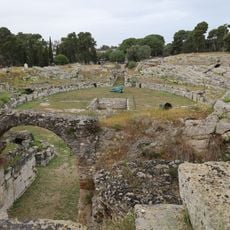
The theatre sits within the Neapolis Archaeological Park alongside other ancient structures, making it easy to explore multiple sites in one visit. Wear sturdy shoes as the terrain is uneven and includes hillsides with stone steps.
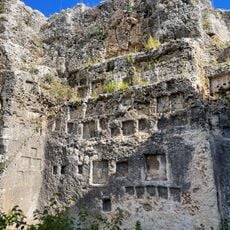
Halfway up the seating, a walkway called the diazoma divides the cavea, and the rock face beside the stairways carries inscriptions naming Olympian Zeus, Herakles and members of Hieron II's family, including his wife Philistis and his daughter-in-law Nereis. Scholars use these names to date the theatre's remodelling.
The community of curious travelers
AroundUs brings together thousands of curated places, local tips, and hidden gems, enriched daily by 93,455 contributors worldwide.