Grotta del Ninfeo, Ancient nymphaeum in Archaeological Park of Neapolis, Italy
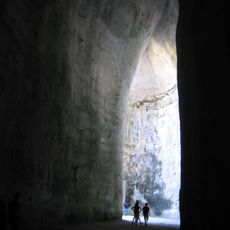
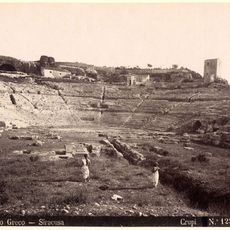
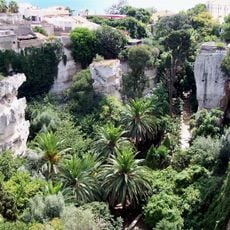
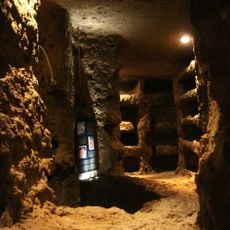
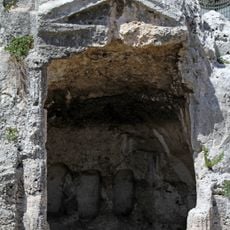
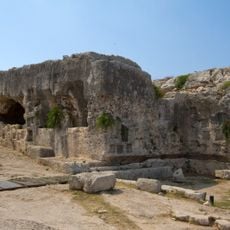
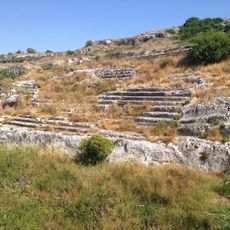
Grotta del Ninfeo is an artificial grotto cut into the rock of Temenite Hill, on a rectangular terrace beside the Greek theatre of Syracuse. It has a vaulted ceiling and a rectangular basin where water cascades from a cavity at the back of the rock wall. At the entrance stood statues of the Muses, three of which, dated to the 2nd century BC, are now in the Paolo Orsi museum.
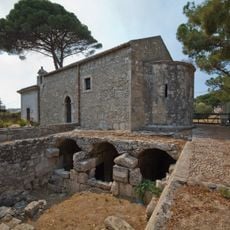
The grotto is thought to have housed the Mouseion, sanctuary of the Muses and seat of the artists' guild where Syracusan actors gathered before performing in the adjacent Greek theatre in the time of Epicharmus and Aeschylus. Its water comes from two Greek-era aqueducts, the Acquedotto del Ninfeo and the Galermi. In the Spanish period a watermill east of the grotto drew its water and emptied it toward the theatre after grinding grain.
Statues of the Muses once stood at this location, reflecting how the ancient Greeks honored these goddesses of the arts and inspiration. Their presence here connected the water shrine to theatrical and cultural life in the city.
The site is located within the archaeological park and accessible during regular visiting hours. Wear sturdy shoes with good grip, as the ground is uneven and can be slippery, especially after rainfall or when water is flowing.
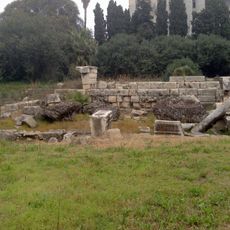
East of the grotto stands the last surviving watermill from the Spanish period in Syracuse. It drew water from the grotto and, after turning the stones that ground grain, emptied it toward the Greek theatre below. The grotto's water still arrives through two Greek-era aqueducts, the Acquedotto del Ninfeo and the Galermi.
The community of curious travelers
AroundUs brings together thousands of curated places, local tips, and hidden gems, enriched daily by 92,840 contributors worldwide.