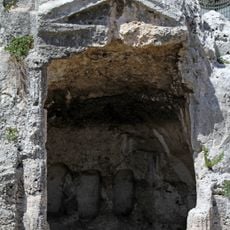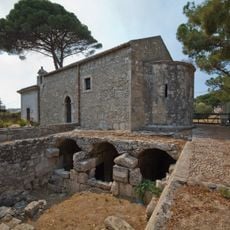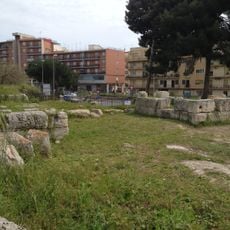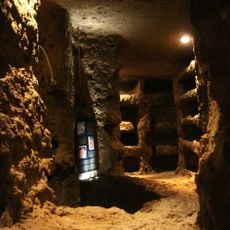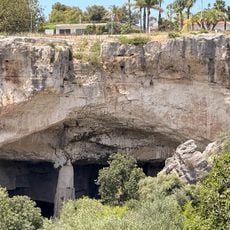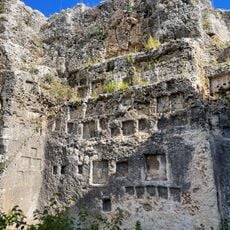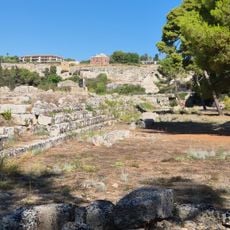
Catacombs in Syracuse, Early Christian burial site in Syracuse, Italy.
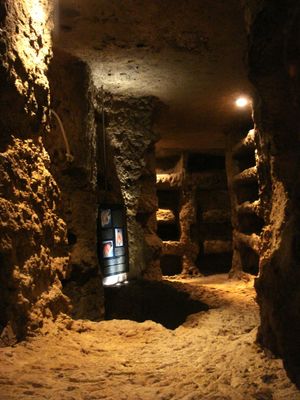
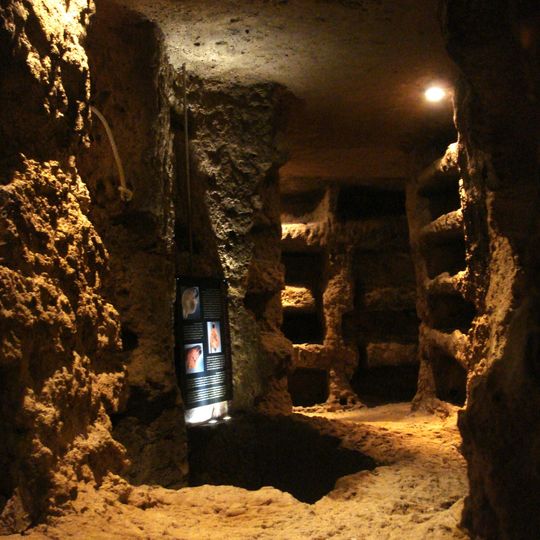
The Catacombs of Syracuse are an underground burial ground featuring limestone corridors with thousands of niches carved into the walls for individual burials. The site also contains decorated stone sarcophagi, small side chambers, and larger rooms that served different purposes within the complex.
The San Giovanni catacombs were dug from 315 around the tomb of Marcian, the city's legendary first bishop, and used for burials until the end of the 5th century. A Greek aqueduct was widened into the Decumanus Maximus, the main gallery, with side galleries branching off. In 1872 the sarcophagus of Adelphia was found here, now in the Paolo Orsi museum; in the Second World War the galleries served as air-raid shelters.
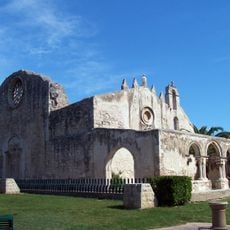
The name San Giovanni comes from the church of John the Evangelist above the tombs, which served as Syracuse's cathedral from the 3rd to the 7th century. The five circular and square rooms off the main gallery are named after Eusebius, Adelfia, Antiochia, the Seven Virgins and an anonymous one; the marble sarcophagus of Adelfia, found in 1872, is now in the Paolo Orsi museum. Little of the wall painting survives.
Access is only available through guided tours that depart regularly from the entrance near the basilica, and sturdy shoes are recommended for the uneven surfaces. The underground passages are narrow and dimly lit, so you should be comfortable in tight spaces and prepared for stone steps.
In the San Giovanni catacombs, five rotundas were cut during construction to remove rubble, then reused as chapels and for light and air. The oldest church in Syracuse lies below the ruined church: the Crypt of St. Marcian, where four Norman columns with capitals showing the four Evangelists stand around a single column held to be the site of his martyrdom.
The community of curious travelers
AroundUs brings together thousands of curated places, local tips, and hidden gems, enriched daily by 94,303 contributors worldwide.