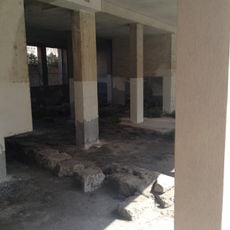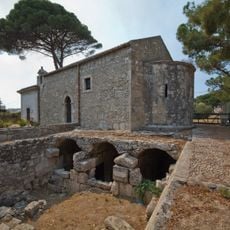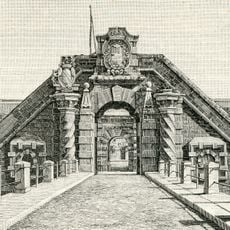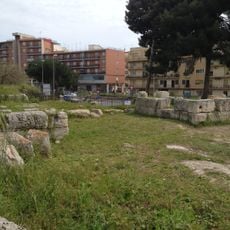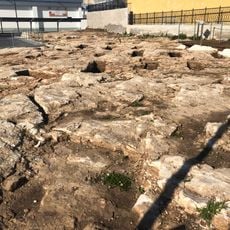
Tomba di Archimede, Archaeological site in Neapolis, Syracuse, Italy.
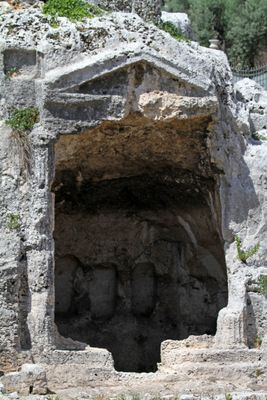
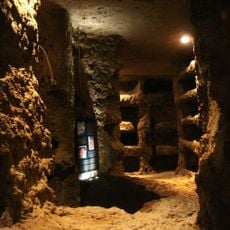
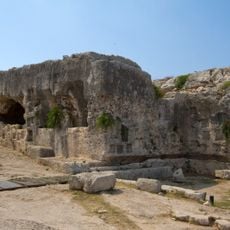
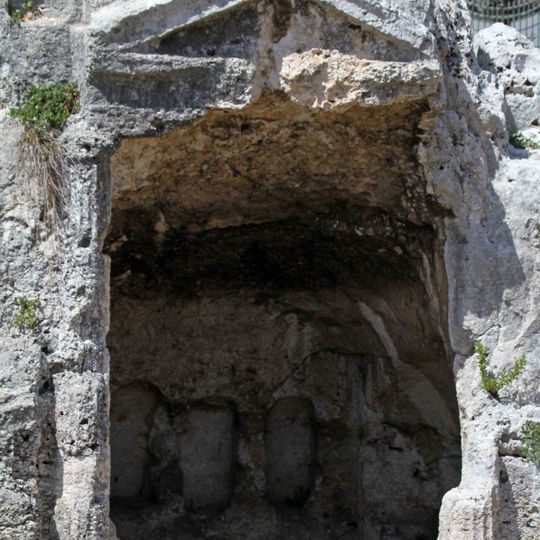
Archimedes' Tomb is a Roman burial structure in the Neapolis quarter of Syracuse featuring a triangular facade. The building contains multiple square niches carved into its walls, originally designed to hold the cremated remains of Roman citizens.
This burial structure was built in the first century before Christ as a columbarium, a shared tomb for multiple families. It was erected centuries after the mathematician Archimedes lived, despite the local tradition that would later connect it to his name.
The niche walls display terracotta images showing deceased individuals dressed formally, as if preparing for an afterlife journey. These carved representations reveal how Roman families chose to remember and honor their departed loved ones.
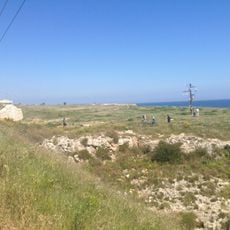
You can view this burial structure from the intersection of Avenue Teracati and Via Saverio Cavallari without needing to enter the archaeological park. The location is easy to reach and offers a clear view of the niche graves from the outside.
Excavations revealed this was never the burial place of the famous mathematician, but rather a Roman columbarium built much later. The name comes from a local legend that developed centuries afterward and contradicts what archaeologists actually found.
The community of curious travelers
AroundUs brings together thousands of curated places, local tips, and hidden gems, enriched daily by 60,000 contributors worldwide.