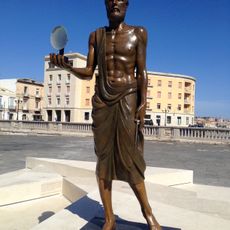
Gymnasium, Archaeological site in Syracuse, Italy.
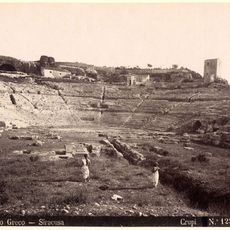
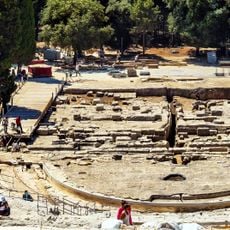
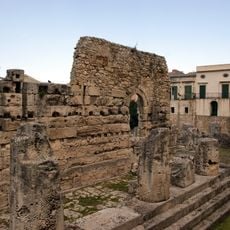
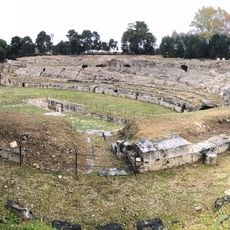
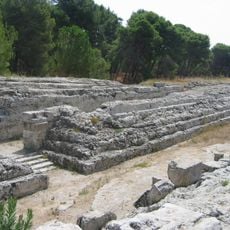
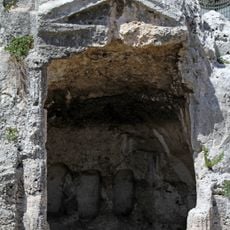
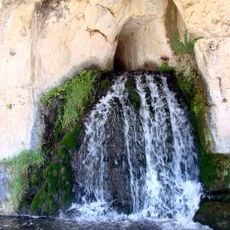
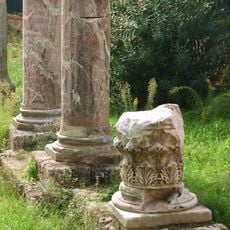
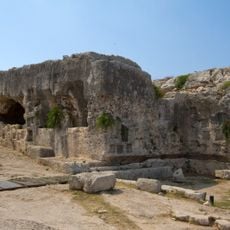
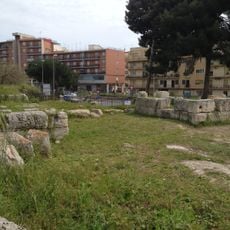
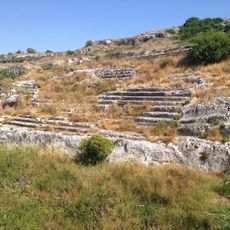
The Gymnasium is a monumental complex on Via Elorina in Syracuse, datable to the second half of the 1st century AD. It comprises a 60 by 50 metre quadriportico with limestone Doric columns, a small Italic podium temple of 17.5 metres square with Corinthian-order fragments, and a theatre cavea 18.90 metres in diameter whose steps were originally faced with marble. Three statue bases remain at the main entrance.
The complex on Via Elorina dates to the second half of the 1st century AD. Archaeologist Francesco Saverio Cavallari found it in 1864 in a marshy area, and it was soon wrongly called Bagno di Venere or Bagno di Diana. Its use remains uncertain; the leading hypothesis is a sanctuary of eastern deities, probably Serapis, supported by a passage in Cicero and a Republican dedication by a Roman citizen named Papinius.
The name Gymnasium is a misnomer: the building's function remains uncertain, and the likeliest reading is a sanctuary of eastern deities, probably Serapis. A Republican-era dedication names a Roman citizen, Papinius, who restored the building at his own expense; Cicero mentions a Serapeum at Syracuse.
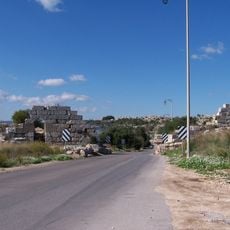
The site is located on Via Elorina in Syracuse and is easy to reach. Visitors should bring sturdy shoes since the grounds are uneven and exposed to sun.
The name Gymnasium is a misnomer: archaeologists still debate the complex's purpose, and the leading theory holds it was a sanctuary of eastern deities, probably Serapis, as a passage of Cicero suggests. A Republican-era dedication names a Roman citizen, Papinius, who restored the building at his own expense.
The community of curious travelers
AroundUs brings together thousands of curated places, local tips, and hidden gems, enriched daily by 93,241 contributors worldwide.