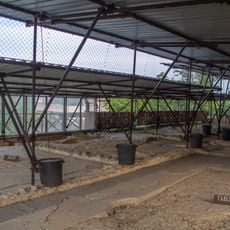
Ripoli, Neolithic archaeological site in Corropoli, Italy
Ripoli is a prehistoric settlement with around 80 oval huts spread across a terrace near the Vibrata stream. Each hut was small and compact, measuring roughly 5 meters across, showing how early people organized their living space.
The site was discovered in 1867 and then excavated in several phases, first in the years that followed, later in the early 1900s, and again from 1960 onward. Recent investigations starting in 2011 continue to reveal information about the early inhabitants.
The settlement shows how people lived together thousands of years ago, with burials placed directly in the village alongside personal items. This way of treating the deceased reveals much about how the community valued one another.
The best way to learn more about this place is to visit the Luigi Pigorini Museum in Rome, where artifacts from this site are displayed. It is worth checking beforehand whether current exhibitions or information about the site itself are available.
Among the objects found are clay figures with distinctive bird-like shapes and stylized arms, pointing to connections with cultures from the Balkans. These special figures show that this village was not isolated but exchanged ideas and goods over long distances.
The community of curious travelers
AroundUs brings together thousands of curated places, local tips, and hidden gems, enriched daily by 92,609 contributors worldwide.