Roman Theatre of Aosta, Roman archaeological site in Aosta, Italy
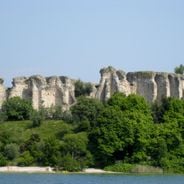
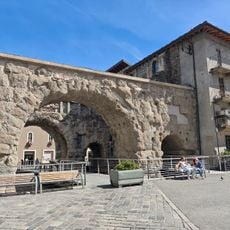
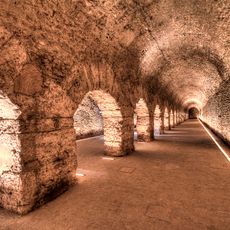
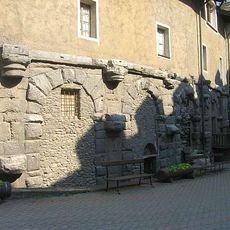
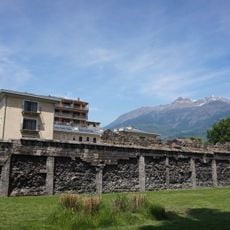
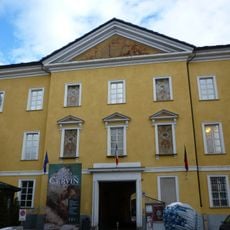
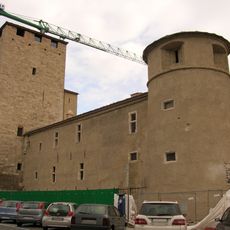
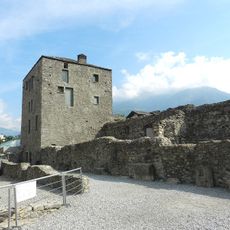
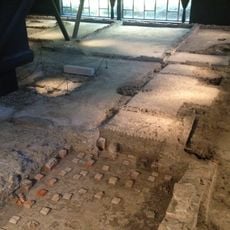
The Roman Theatre of Aosta stands near the Porta Pretoria, occupying three blocks along the Decumanus Maximus. Its rectangular enclosure measures 81 by 64 metres, and the southern facade survives to a height of 22 metres, marked by vertical buttresses every 5.5 metres and four orders of openings: entrance arcades below and three rows of windows above. The cavea, seating 3,500 to 4,000 spectators, was enclosed in a rectangle, suggesting a covered theatrum tectum. The orchestra had a radius of 10 metres; of the stage wall, decorated with Corinthian columns, statues and marble, only the foundations remain.
The theatre was built a few decades after the founding of Augusta Praetoria in 25 BC, on a site where traces of earlier buildings were found; the neighbouring amphitheatre dates to the reign of Claudius. From 1838 Carlo Promis began the first excavations, and the walls he uncovered were long attributed to a "Palais du préteur". Major restoration ran from 1933 to 1941, and the work was officially completed in 2009.
Since 2011 a covered structure seating over 1,000 has stood beside the Roman complex; its stage hosted the Premio Mogol in 2011. In summer the theatre holds concerts and performances, while in winter the Christmas markets occupy the site.
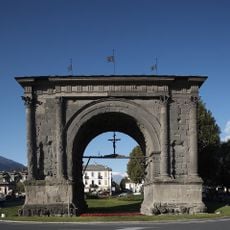
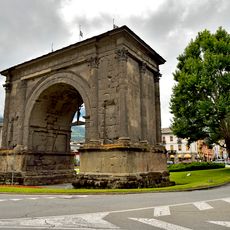
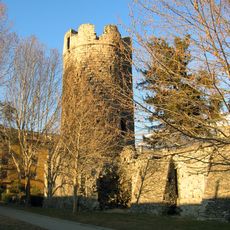
The site sits in the center of Aosta within walking distance of the Roman arch and the city walls, so it fits easily into a broader tour of the ancient town. Wear sturdy shoes, as the ground across the archaeological area is uneven in places.
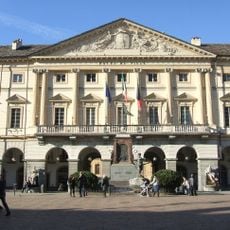
Local tradition holds that in 1833, when Aosta's town hall was being built, the theatre was proposed as a stone quarry. Prior and historian Jean-Antoine Gal is said to have walked to Turin to ask the king to intervene, saving the monument.
The community of curious travelers
AroundUs brings together thousands of curated places, local tips, and hidden gems, enriched daily by 93,374 contributors worldwide.