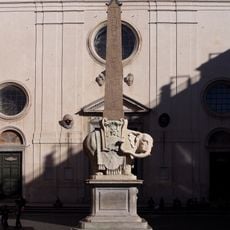
Macuteo obelisk, Egyptian obelisk at Piazza della Rotonda, Italy.
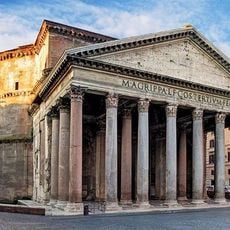
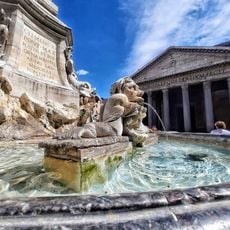
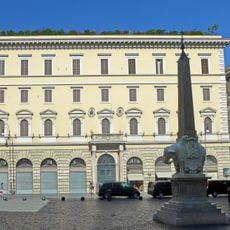
The Macuteo obelisk rises in Piazza della Rotonda in front of the Pantheon, standing about 6.5 meters tall and carved from granite stone. A fountain with dolphin sculptures surrounds its base, creating a striking focal point in the center of the square.
Carved from granite under Ramses II, the obelisk bears two cartouches of the pharaoh in its pyramidion. It stood with the Obelisco Matteiano in the sanctuary of Amun-Re at Heliopolis, then was brought to Rome by Domitian for the Iseum Campense, the sanctuary of Isis near the Pantheon. Rediscovered in 1575 (some accounts say two centuries earlier), it was set up on Piazza di San Macuto before Clement XI moved it to Piazza della Rotonda in 1711.
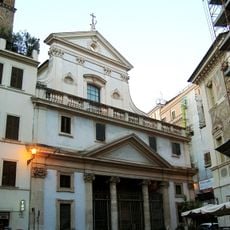
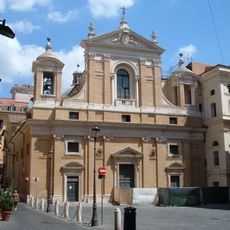
The obelisk's name recalls its findspot: it was unearthed near the church of San Macuto, hence "Macuteo". Its base carries a Latin inscription recording that Clement XI set it here in 1711 "for the ornament of the fountain and the square", during the 11th year of his pontificate. The pyramidion at the top holds two cartouches bearing the name of Ramses II.
The obelisk sits in the middle of a public square and is accessible at all times, located directly in front of the Pantheon in central Rome. Buses on lines 40 and 64 stop nearby, making it easy to reach by public transportation.
The obelisk forms a pair with the granite stump Obelisco Matteiano in Villa Celimontana; both once stood together in the sanctuary of Amun-Re at Heliopolis. Its two cartouches of Ramses II are carved in the pyramidion at the top, and an inscription on the base records Clement XI's 1711 placement.
The community of curious travelers
AroundUs brings together thousands of curated places, local tips, and hidden gems, enriched daily by 94,244 contributors worldwide.