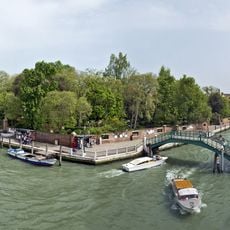
Nome di Gesù, Neoclassical church in Santa Croce, Venice, Italy
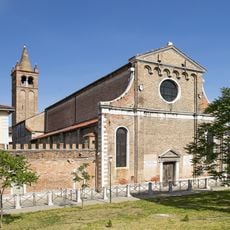
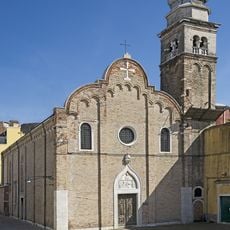
Nome di Gesù is a small neoclassical church with a gabled facade, reached through a high walled enclosure whose wide gate is flanked by two rusticated pillars topped by stone angels. Above the door, the architrave reads Ad Maiorem Dei Gloriam beneath a lunette window and a dentilled pediment. Inside, two tapered Ionic columns separate the single rectangular hall from the presbytery, and statues of the twelve apostles stand in niches along the walls.
Don Giuliano Catullo acquired the site in 1806 but began building only in 1815, funded by Count Costanzo Taverna and other private donors. Giannantonio Selva designed the church; after his death Antonio Diedo completed it in 1834 under Austrian rule. The adjoining hospice, home to Clarisse since 1806, became a canonically recognised monastery in 1846; in June 1849 the nuns fled Austrian artillery fire, sheltering first at San Cassiano, then at San Francesco della Vigna.
The church serves today as a place of worship for the Greek-Ukrainian Catholic community and their gatherings. This reflects Venice's religious diversity extending beyond Italian Catholic traditions.
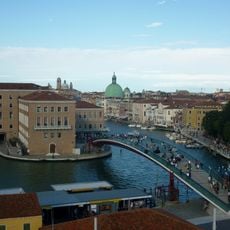
The church sits near the Ponte della Libertà and Piazzale Roma, making it readily accessible for visitors arriving in Venice by car or bus. This location serves as a good entry point for travelers coming from the mainland.
The small bell tower on the adjoining house came from the church of San Basso, closed for worship, not from San Geminiano as is sometimes claimed. Don Giuliano Catullo, who promoted the building, held that reused material should not be employed for the church itself.
The community of curious travelers
AroundUs brings together thousands of curated places, local tips, and hidden gems, enriched daily by 92,861 contributors worldwide.