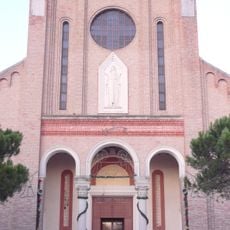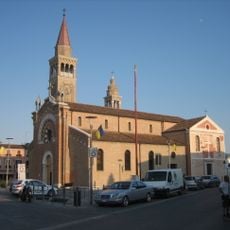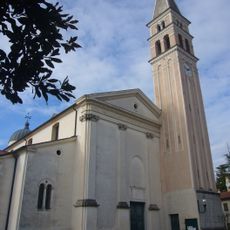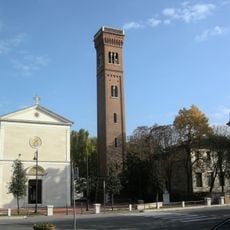
Antiche Mura, Archaeological site in Jesolo, Italy.
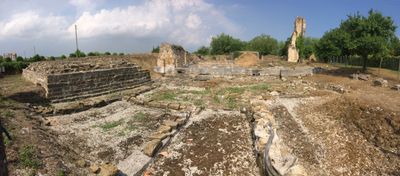
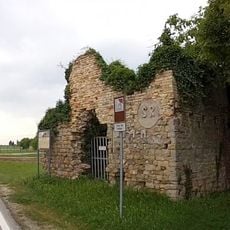
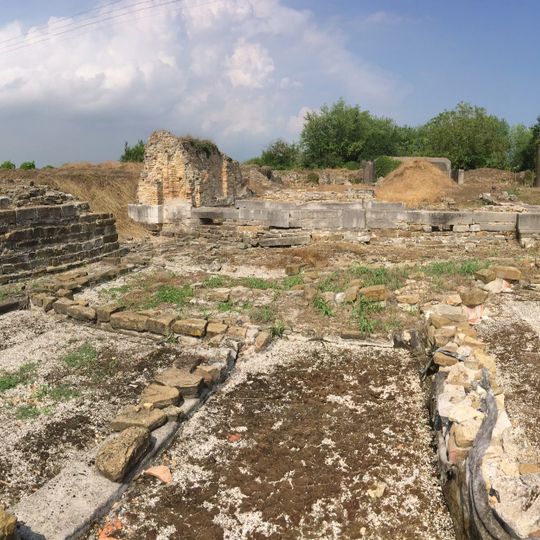
Antiche Mura is an archaeological site in Jesolo containing the remains of two medieval religious buildings. The site displays multiple layers of structures from different periods, including a church and monastery ruins.
The basilica of Santa Maria Assunta was built in the 9th century as cathedral of the diocese of Equilio, one of the most important churches of the Venetian Lagoon after San Marco. From the late 12th century an environmental crisis led to the area's abandonment; in 1466 Pope Paul II suppressed the diocese because the city and church of Equilio were destroyed. Patriarch Tommaso Donà then banned reuse of its materials, and in 1865 Austro-Hungarian authorities removed much of the surviving marble.
Local tradition blames Attila the Hun for the church's destruction, though the sources record the Hungarian invasion of 899. In 1760 three bodies were found in the cemetery beside the church and taken to be saints: Anthony, Renier and Gioliano. The mosaic church's floor carried dedications to its donors, among them Paulus, Iohannes, Victorinus and Marturius.
The site can be explored with a guide who provides insight into the different layers and structures found there. It is advisable to check on-site conditions and availability of guided access before planning your visit.
Under the cathedral's north-west zone, between the side and central naves, digs by Ca' Foscari (1963) and Basel (1985) found a 6th–7th-century basilica, about 25 by 14 m, with three semicircular apses. Its mosaic floor names donors such as Paulus, Iohannes and Victorinus; it was destroyed with Equilio in the Hungarian invasion of 899.
The community of curious travelers
AroundUs brings together thousands of curated places, local tips, and hidden gems, enriched daily by 93,015 contributors worldwide.