Baths of Nero, Roman bathhouse archaeological site in Pisa, Italy
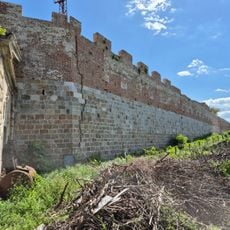
The Baths of Nero (Bagni di Nerone) are a Roman thermae complex near Porta a Lucca in Pisa, now below street level. The best-preserved part is the laconicum, an octagonal hall with an apse and a perforated dome, partly restored. Remains include walls of the palaestra, the apodyterium and two walls of the tepidarium. The original structure used opus vittatum mixtum, alternating brick and tuff blocks.
The bathing complex was built in the 80s of the first century under Emperor Domitian when Pisa was a thriving port city. The project followed Roman construction techniques using brick and tuff to create durable structures that could withstand heat and water exposure.
The baths served as a gathering place for Pisa's residents, a space where daily routines and social encounters happened naturally among neighbors and visitors. The arrangement of hot, warm, and cool zones reflected how Roman society organized activities and spaces for different groups.
The site is located near Porta a Lucca and is today an archaeological area with partially exposed remains that visitors can view from the outside. Expect uneven ground and limited access to interior spaces, as the structure remains under protection and ongoing preservation.
An aqueduct called Caldaccoli brought water to the baths from outside the city, and parts of this ancient water line remain visible near San Giuliano Terme today. This engineering feat shows how Romans created complex systems to move water over great distances just to supply these bathing facilities.
The community of curious travelers
AroundUs brings together thousands of curated places, local tips, and hidden gems, enriched daily by 94,590 contributors worldwide.