Bastion Parlascio, Medieval bastion in Pisa, Italy
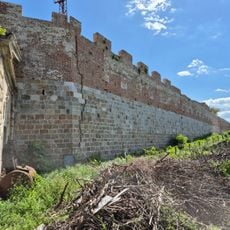
The Bastion of Parlascio stands as a fortified structure integrated into Pisa's ancient city walls, featuring robust stone construction and strategic positioning near the Roman archaeological site known as Bagni di Nerone.
The first defence of the Porta del Parlascio was a gate tower built in 1320 by Jacopo di Ridolfo. Under the first Florentine rule a counter-gate, attributed to Filippo Brunelleschi, was added in the first half of the 15th century. The bastion still visible today was built in 1543 by Nanni Unghero, one of Italy's first examples of modern fortification; its construction closed the old gate and led to the opening of today's Porta a Lucca.
The bastion represents the evolution of Italian military architecture from medieval to Renaissance periods, serving as a museum space that illustrates Pisa's defensive strategies and urban development through educational panels and exhibitions.
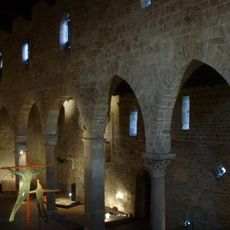
The bastion stands beside Porta a Lucca, at the corner of via Contessa Matilde and Largo del Parlascio. Since 12 July 2024 the restored interior and virtual museum are open, and the city walls can be reached from inside the bastion. The adjacent Bagni di Nerone archaeological site lies next to it.
The interior of the walls housed a workshop, and until 2021 a bar stood on the corner of via Contessa Matilde and Largo del Parlascio. The inner part, however, stayed closed and inaccessible except on rare occasions. Restoration of the interior rooms ended on 12 July 2024 with the installation of a virtual museum, which also opened access to the walls from the bastion.
The community of curious travelers
AroundUs brings together thousands of curated places, local tips, and hidden gems, enriched daily by 93,134 contributors worldwide.